Many people get confused when comparing difference between veal and beef because both come from cattle, yet they look, taste, and cook differently. If you have ever seen veal on a restaurant menu and wondered how it differs from regular beef, you’re not alone.
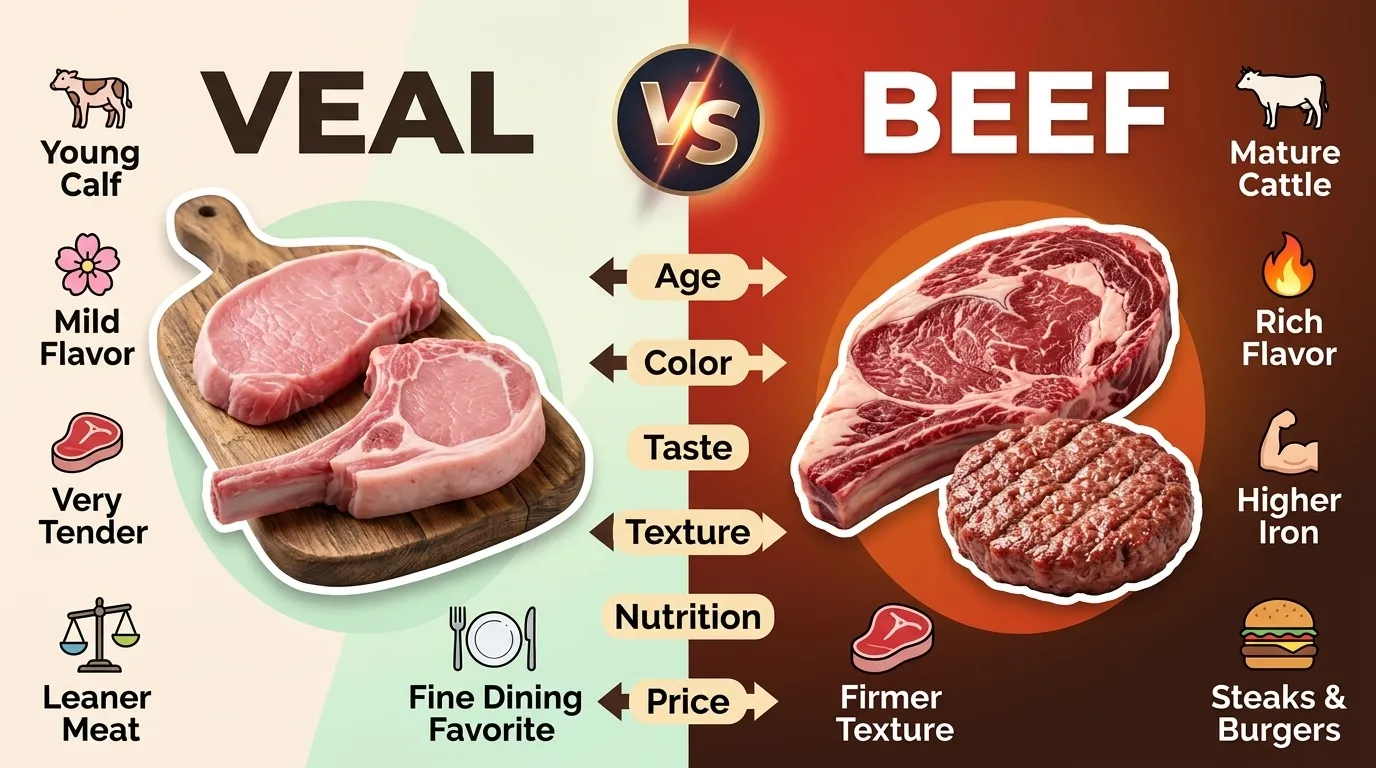
The difference between both mainly comes down to the age of the animal. Veal comes from young calves, while beef comes from mature cattle. This age difference affects the meat’s color, texture, flavor, nutritional profile, and cooking methods.
In this guide, you’ll learn the complete difference between them, including nutrition, taste, culinary uses, pricing, farming practices, and common misconceptions. Whether you’re a home cook, food enthusiast, student, or someone comparing meats for healthier eating, this article provides everything you need in one place.
Quick Answer: Difference Between Veal and Beef
Veal is meat obtained from young calves, usually under 6 months old, while beef comes from fully grown cattle that are typically over 1 year old.
Example: A veal chop is usually lighter in color and more tender than a beef steak because the animal is younger and has less developed muscle tissue.
Definition of Both
- Veal: Meat from young calves, generally under 6 months old, known for its tender texture and mild flavor.
- Beef: Meat from mature cattle, known for its darker color, richer taste, and firmer texture.
Example: Veal scallopini and beef steak are both cattle-derived meats but differ significantly in flavor and texture.
Pronunciation of Both Terms
| Term | US Pronunciation | UK Pronunciation |
|---|---|---|
| Veal | /veel/ | /viːl/ |
| Beef | /beef/ | /biːf/ |
Now that you know what each term means, let’s understand the major differences that influence taste, cooking, nutrition, and purchasing decisions.
Veal vs Beef Comparison Table
| Feature | Veal | Beef |
|---|---|---|
| Animal Age | Young calves | Mature cattle |
| Meat Color | Pale pink | Dark red |
| Flavor | Mild and delicate | Rich and robust |
| Texture | Very tender | Firmer and denser |
| Fat Content | Generally lower | Usually higher |
| Cooking Style | Quick cooking methods | Wide variety of methods |
| Price | Often more expensive | Usually more affordable |
| Popular Dishes | Veal Parmesan, Osso Buco | Steaks, Burgers, Roasts |
Key Differences Explained Between Difference Between Veal and Beef
1. Age of the Animal
The biggest difference is age.
Veal comes from calves that are only a few months old. Beef comes from older cattle that have fully developed muscles.
Real-life example: Younger animals produce softer meat because the muscle fibers are less mature.
2. Color of the Meat
Veal has a pale pink appearance.
Beef is dark red due to higher levels of myoglobin, a protein that stores oxygen in muscles.
User insight: Many shoppers immediately identify the difference by color alone.
3. Flavor Profile
Veal offers a delicate, subtle taste.
Beef provides a stronger, meatier flavor preferred in burgers and steaks.
4. Texture and Tenderness
Veal is naturally tender.
Beef varies depending on the cut, aging process, and cooking method.
5. Nutritional Differences
Veal often contains less fat and fewer calories.
Beef usually provides more iron and stronger flavor compounds.
6. Cooking Applications
Veal is commonly used in European cuisine.
Beef dominates global dishes ranging from barbecue to fast food.
7. Cost and Availability
Veal is less common and often priced higher.
Beef is widely available in supermarkets worldwide.
Why Does the Difference Between Both Exist?
The difference exists because muscle development changes dramatically as cattle age.
As animals grow:
- Muscle fibers become stronger
- Fat distribution increases
- Flavor compounds develop
- Meat color darkens
In simple words, age changes almost every characteristic of the meat.
This is why chefs select veal for delicate dishes and beef for hearty meals.
How Does Veal Taste Compared to Beef?
Taste is one of the most noticeable differences.
Veal Taste
- Mild
- Slightly sweet
- Delicate
- Less intense
Beef Taste
- Rich
- Savory
- Deeply meaty
- Stronger umami flavor
Many beginners describe veal as “lighter” while beef feels “heartier.”
Which Is More Tender: Veal or Beef?
Veal is generally more tender.
Because calves have not developed heavily worked muscles, the meat remains soft and easy to chew.
Example
A veal cutlet can often be cooked quickly with minimal preparation.
A beef roast may require slow cooking for optimal tenderness.
However, premium beef cuts like tenderloin can rival veal in softness.
Nutritional Comparison: Veal vs Beef
| Nutrient | Veal | Beef |
|---|---|---|
| Calories | Lower | Higher |
| Protein | High | High |
| Fat | Lower | Higher |
| Iron | Moderate | Higher |
| Vitamin B12 | Good source | Excellent source |
| Zinc | Good source | Excellent source |
| Cholesterol | Moderate | Moderate |
What Does This Mean?
If you’re seeking leaner meat, veal may be appealing.
If you’re looking for higher iron intake and a richer taste, beef often becomes the preferred choice.
Difference Between Both in Cooking
Professional chefs choose these meats for different reasons.
Common Veal Dishes
- Veal Parmesan
- Veal Piccata
- Osso Buco
- Wiener Schnitzel
Common Beef Dishes
- Ribeye Steak
- Beef Burgers
- Pot Roast
- Beef Stew
- Barbecue Brisket
Because veal has a delicate flavor, heavy seasoning is usually avoided.
Beef can handle stronger spices, marinades, and smoking techniques.
Which Is More Expensive: Veal or Beef?
In most markets, veal costs more than regular beef.
Reasons include:
- Smaller supply
- Specialized farming practices
- Lower production volume
- Restaurant demand
Premium beef cuts such as Wagyu can exceed veal prices, but average veal remains relatively expensive compared to standard beef.
Difference and Similarity Between Both
| Feature | Veal | Beef | Similarity |
|---|---|---|---|
| Source Animal | Young calf | Mature cattle | Both come from cattle |
| Protein Content | High | High | Excellent protein sources |
| Meat Color | Pale pink | Dark red | Both are red meat categories |
| Cooking Uses | Delicate recipes | Diverse recipes | Both used globally |
| Nutrition | Leaner option | More iron-rich | Provide essential nutrients |
| Flavor | Mild | Rich | Both provide savory taste |
| Availability | Less common | Widely available | Sold in butcher shops |
| Culinary Value | Fine dining favorite | Everyday favorite | Both valued by chefs |
This table clearly shows the difference and similarity between difference between veal and beef for quick understanding.
Common Mistakes with Difference Between Veal and Beef
Mistake 1: Thinking They Come from Different Animals
Correction: Both come from cattle.
Mistake 2: Assuming Veal Is Just a Beef Cut
Correction: Veal is categorized by animal age, not cut type.
Mistake 3: Believing Veal and Beef Taste Identical
Correction: Their flavor profiles differ significantly.
Mistake 4: Cooking Veal Like Tough Beef Cuts
Correction: Veal usually requires gentler cooking methods.
Mistake 5: Assuming Beef Is Always Less Tender
Correction: Premium beef cuts can be extremely tender.
Real-Life Examples with Difference Between Veal and Beef
Example 1: Home Cooking
A cook preparing a quick Italian dinner may choose veal cutlets for fast cooking and tenderness.
Example 2: Steakhouse Industry
Restaurants often use beef steaks because customers prefer bold flavors.
Example 3: Fine Dining
Luxury restaurants frequently feature veal dishes for refined textures.
Example 4: Nutrition Planning
Someone seeking lean protein may compare veal with beef before selecting meals.
Example 5: Culinary Education
Cooking schools teach both meats because they require different preparation techniques.
When to Use Each
Use Veal When:
- You want delicate flavor
- Tenderness is a priority
- Preparing European-style recipes
- Cooking elegant restaurant-style meals
Use Beef When:
- You prefer stronger flavor
- Making burgers or steaks
- Preparing barbecue dishes
- Cooking slow-cooked meals
Why People Get Confused in Difference Between Both
Several factors create confusion.
Similar Animal Source
Both come from cattle.
Similar Appearance in Some Cuts
Certain cuts can look alike to inexperienced shoppers.
Restaurant Menus
Many menus list veal without explaining what it is.
Media and Online Discussions
Food content on platforms like YouTube and Instagram often discusses cooking techniques without clearly explaining the age difference between both.
Expert Insight
From a culinary perspective, neither veal nor beef is universally “better.”
Professional chefs select the meat based on the desired outcome.
In real scenarios, veal excels when tenderness and subtle flavor are important. Beef shines when richness, depth, and versatility are the goal.
Most beginners focus only on taste, but experienced cooks also consider texture, cooking method, nutritional needs, and dish style before making a choice.
Understanding these factors helps consumers make smarter purchasing and cooking decisions.
Frequently Asked Questions
Is veal healthier than beef?
Veal is often leaner and lower in calories, while beef typically contains more iron and a richer flavor.
Why is veal lighter in color than beef?
Veal comes from younger animals with lower myoglobin levels, resulting in a paler color.
Does veal taste like beef?
Yes, but veal has a milder and more delicate flavor.
Which is more expensive, veal or beef?
Veal is usually more expensive because of limited supply and specialized production.
Can I substitute beef for veal?
Often yes, but the flavor and texture will differ.
Is veal more tender than beef?
Generally yes, because it comes from younger animals.
What dishes are commonly made with veal?
Veal Parmesan, Veal Piccata, Osso Buco, and Wiener Schnitzel are popular examples.
Why do chefs use veal?
Chefs value veal for its tenderness and subtle flavor profile.
Is beef higher in iron than veal?
Yes, beef generally contains more iron due to higher myoglobin levels.
What is the main difference between both?
The primary difference is the age of the animal from which the meat is obtained.
Conclusion
Understanding the difference between veal and beef becomes simple once you know that both come from cattle but at different stages of life. Veal comes from young calves and is prized for its pale color, tender texture, and delicate flavor. Beef comes from mature cattle and offers a richer taste, darker appearance, and greater versatility across global cuisines.
The choice between both depends on your goals. If you want a mild, elegant meat for refined recipes, veal may be the better option. If you prefer bold flavor, stronger nutritional density in terms of iron, and a wider variety of cooking applications, beef is often the preferred choice.
In practical use, neither meat is inherently superior. They simply serve different culinary purposes. By understanding their differences in age, taste, nutrition, texture, and cooking methods, you can confidently select the right option for your meals and dietary preferences.

Sarfraz Ahmad is language researcher and content writer who specializes in explaining the difference between commonly confused English words. Through WordClearify, learners understand subtle word distinctions in a simple, structured, and practical way. My writing focuses on clarity, real-life examples, and easy comparisons for students, bloggers, and professionals worldwide.