Many people get confused about the difference between malts and shakes because both drinks look almost the same. They are cold, creamy, sweet, and usually served in tall glasses with whipped cream. But the real difference between malts and shakes comes from one special ingredient: malted milk powder.
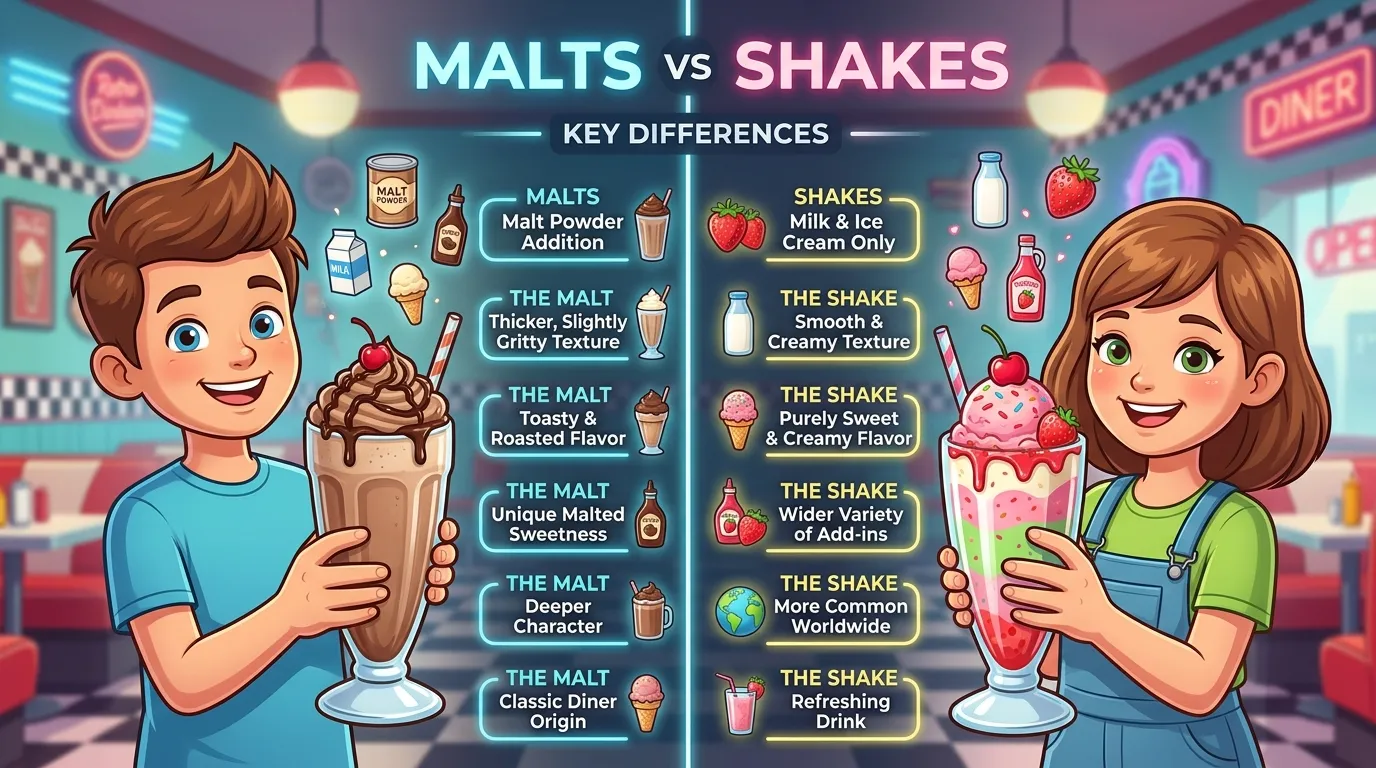
In simple words, a milkshake is made with milk, ice cream, and flavoring, while a malt includes all of those ingredients plus malt powder. That small addition changes the taste, texture, and overall experience.
Today, the difference between malts and shakes matters even more because retro diners, fast-food chains, dessert cafes, and even social media platforms like Instagram and YouTube frequently showcase both drinks.
In this guide, you will learn what malts and shakes are, how they taste, why people confuse them, when to choose each one, and which drink may suit your preferences better.
Quick Answer: Difference Between Malts and Shakes
A milkshake is a blended drink made with milk, ice cream, and flavor syrup. A malt is basically a milkshake with added malted milk powder.
For example, a chocolate shake tastes creamy and sweet, while a chocolate malt has a richer, toasted, slightly nutty flavor because of the malt powder.
Definition of Difference Between Malts and Shakes
- Malt: A cold dessert drink made with milk, ice cream, flavoring, and malted milk powder that gives a toasted, rich taste.
- Shake: A creamy blended drink made with milk, ice cream, and flavoring like chocolate, vanilla, or strawberry.
Example
A vanilla shake tastes smooth and sweet, while a vanilla malt tastes deeper and slightly biscuit-like.
Pronunciation of Both Terms
- Malt
- US: /mɔlt/
- UK: /mɒlt/
- Shake
- US: /ʃeɪk/
- UK: /ʃeɪk/
Now that the basic meaning is clear, let’s understand the deeper comparison between these classic frozen drinks.
Difference Between Malts and Shakes Table
| Feature | Malt | Shake | Similarity |
| Main Ingredient | Includes malted milk powder | Does not include malt powder | Both use milk and ice cream |
| Taste | Rich, toasted, slightly nutty | Sweet and creamy | Both can be flavored |
| Texture | Slightly thicker and fuller | Smooth and creamy | Both are blended drinks |
| Popular Era | Classic diner favorite from early 1900s | Popular worldwide today | Both are dessert beverages |
| Flavor Profile | Complex and deeper taste | Simpler sweet flavor | Both can be chocolate or vanilla |
| Audience Preference | Often liked by adults or retro drink fans | Popular among kids and teens | Both appeal to dessert lovers |
| Preparation | Extra malt powder mixed in | Basic blending process | Both use blenders |
| Restaurant Use | Common in vintage diners | Common in cafes and fast-food chains | Both appear on dessert menus |
This table clearly shows the difference and similarity between difference between malts and shakes for quick understanding.
Key Differences Explained Between Difference Between Malts and Shakes
1. Malt Powder Changes Everything
The biggest difference is malted milk powder. It adds a warm, toasted flavor that many people describe as cereal-like or biscuit-like.
A normal shake stays sweet and simple.
Real-life example:
At an old-school diner, a chocolate malt usually tastes richer than a regular chocolate shake.
2. Taste Complexity
Shakes mainly focus on sweetness. Malts have more depth and a slightly savory edge.
Many users who try a malt for the first time notice the flavor feels more “grown-up.”
3. Historical Background
Malts became popular in American soda fountains during the early 20th century. Shakes later became mainstream through fast-food restaurants and chains.
Classic diners still treat malts as nostalgic drinks.
4. Texture Difference
Because of the malt powder, malts can feel a little thicker and denser.
Shakes are usually lighter and smoother.
5. Popularity Among Different Age Groups
Kids often prefer shakes because they taste sweeter.
Adults sometimes enjoy malts because of the deeper flavor profile.
6. Flavor Pairing
Malt works especially well with chocolate and vanilla flavors.
Fruit shakes like strawberry shakes usually do not use malt powder often.
7. Nutritional Variation
Malts may contain slightly more carbohydrates because of the malted milk powder.
However, both drinks are generally high-calorie dessert beverages.
What Is a Malted Milk Powder and Why Does It Matter?
Malted milk powder is made from malted barley, wheat flour, and milk solids. Originally, it was created as a nutritional supplement.
Over time, soda fountains discovered that adding it to milkshakes created a richer flavor. That is how the “malt” drink was born.
In practical use, the powder gives:
- Toasted flavor
- Slight caramel notes
- Creamier mouthfeel
- More depth
This is why many dessert experts consider malts more flavorful than standard shakes.
How Does a Shake Work?
A milkshake is simpler. It combines:
- Ice cream
- Milk
- Syrup or flavoring
The blender creates a smooth frozen texture.
Modern restaurants and brands often create creative shake versions with:
- Cookies
- Brownies
- Candy toppings
- Protein powder
- Coffee flavors
Platforms like TikTok and Instagram helped oversized “freakshakes” become globally popular.
Difference Between Malts and Shakes in Taste
Malt Taste
- Toasted
- Slightly nutty
- Rich
- Deep flavor
Shake Taste
- Sweet
- Creamy
- Light
- Dessert-like
Many beginners expect both drinks to taste identical. But after one sip, the flavor difference becomes obvious.
Why Do People Get Confused Between Malts and Shakes?
Similar Appearance
Both drinks are served cold in similar glasses with whipped cream.
Restaurant Menus
Some restaurants use the words “malt” and “shake” loosely, which confuses customers.
Social Media Influence
Food influencers on YouTube often focus more on appearance than ingredients.
Regional Differences
In some areas, people rarely order malts anymore, so younger customers may not know the distinction.
When Should You Choose a Malt Instead of a Shake?
Choose a malt if you:
- Enjoy richer dessert flavors
- Like retro diner foods
- Prefer toasted or caramel-like notes
- Want a more classic soda fountain experience
Best situations:
- Vintage diner visits
- Chocolate dessert pairings
- Old-fashioned burger meals
When Should You Choose a Shake?
Choose a shake if you:
- Prefer sweeter drinks
- Want fruity flavors
- Like lighter dessert beverages
- Enjoy trendy cafe drinks
Best situations:
- Fast-food meals
- Summer drinks
- Dessert cravings
- Kids’ treats
Difference Between Malts and Shakes for Fitness and Nutrition
Today, many fitness cafes and protein brands create healthier shakes using:
- Protein powder
- Almond milk
- Oats
- Low-sugar ingredients
Meanwhile, traditional malts remain more dessert-focused.
Apps connected to fitness tracking, including brands integrated with Google health systems, often categorize shakes under smoothies or dessert beverages.
In real scenarios, protein shakes are different from both malts and classic milkshakes.
Common Mistakes With Difference Between Malts and Shakes
1. Thinking They Are Completely Different Drinks
A malt is actually a type of shake with added malt powder.
Fix:
Remember the formula:
Shake + malt powder = malt.
2. Assuming Malt Means Alcohol
Some beginners connect “malt” with alcoholic beverages.
Fix:
Malted milk powder in dessert drinks is non-alcoholic.
3. Ordering a Malt Expecting Pure Sweetness
Malts have a richer flavor.
Fix:
Choose a regular shake if you dislike toasted flavors.
4. Confusing Protein Shakes With Milkshakes
Fitness shakes serve a different purpose.
Fix:
Protein shakes focus on nutrition, not dessert flavor.
5. Believing All Restaurants Use Authentic Malt Powder
Some restaurants only label drinks as malts for marketing.
Fix:
Ask whether real malted milk powder is included.
Real-Life Examples With Difference Between Malts and Shakes
Example 1: Fast-Food Restaurant
A customer orders a vanilla shake because they want a sweet dessert drink after burgers.
Example 2: Retro Diner
Another customer chooses a chocolate malt for a classic 1950s-style dining experience.
Example 3: Fitness Cafe
A gym visitor orders a protein shake instead of either option because they want higher protein and less sugar.
Example 4: Dessert Shop Content Creator
A food influencer posts giant milkshakes on Instagram for visual engagement.
Example 5: Family Gathering
Children usually choose strawberry shakes, while older family members may enjoy malts.
Expert Insight
From a food and beverage perspective, malts survive because they offer a unique flavor identity that regular shakes cannot fully copy.
In practical use, most beginners prefer shakes first because the flavor feels familiar. But many long-time dessert lovers eventually appreciate the deeper taste of a malt.
Classic American diners continue serving malts because nostalgia and flavor experience still matter strongly in food culture.
FAQs About Difference Between Malts and Shakes
Is a malt healthier than a shake?
Not usually. Both are dessert drinks with sugar and calories.
What gives a malt its unique taste?
Malted milk powder creates the toasted and rich flavor.
Can you turn any shake into a malt?
Yes. Adding malted milk powder turns a shake into a malt.
Why are malts less common today?
Modern cafes focus more on trendy shakes and smoothies.
Are chocolate malts popular?
Yes. Chocolate is one of the most common malt flavors.
Do malts contain alcohol?
No. Dessert malts are non-alcoholic drinks.
Which is sweeter: malt or shake?
A regular shake is usually sweeter.
Why do diners still serve malts?
Malts are connected to classic American soda fountain culture.
Are protein shakes the same as milkshakes?
No. Protein shakes focus on nutrition rather than dessert flavor.
Which drink is better for kids?
Most kids prefer sweet milkshakes over malts.
Conclusion
Understanding the difference between malts and shakes becomes easy once you know the role of malted milk powder. A shake is creamy, sweet, and simple, while a malt adds a deeper toasted flavor that creates a richer dessert experience. Although both drinks share similar ingredients like milk and ice cream, the taste and texture feel noticeably different.
Whether you choose a malt or a shake depends on your personal taste preferences. If you want a classic sweet treat, a shake is perfect. If you prefer something richer and more flavorful, a malt may become your favorite. Both drinks remain iconic parts of dessert culture even in 2026.

Sarfraz Ahmad is language researcher and content writer who specializes in explaining the difference between commonly confused English words. Through WordClearify, learners understand subtle word distinctions in a simple, structured, and practical way. My writing focuses on clarity, real-life examples, and easy comparisons for students, bloggers, and professionals worldwide.