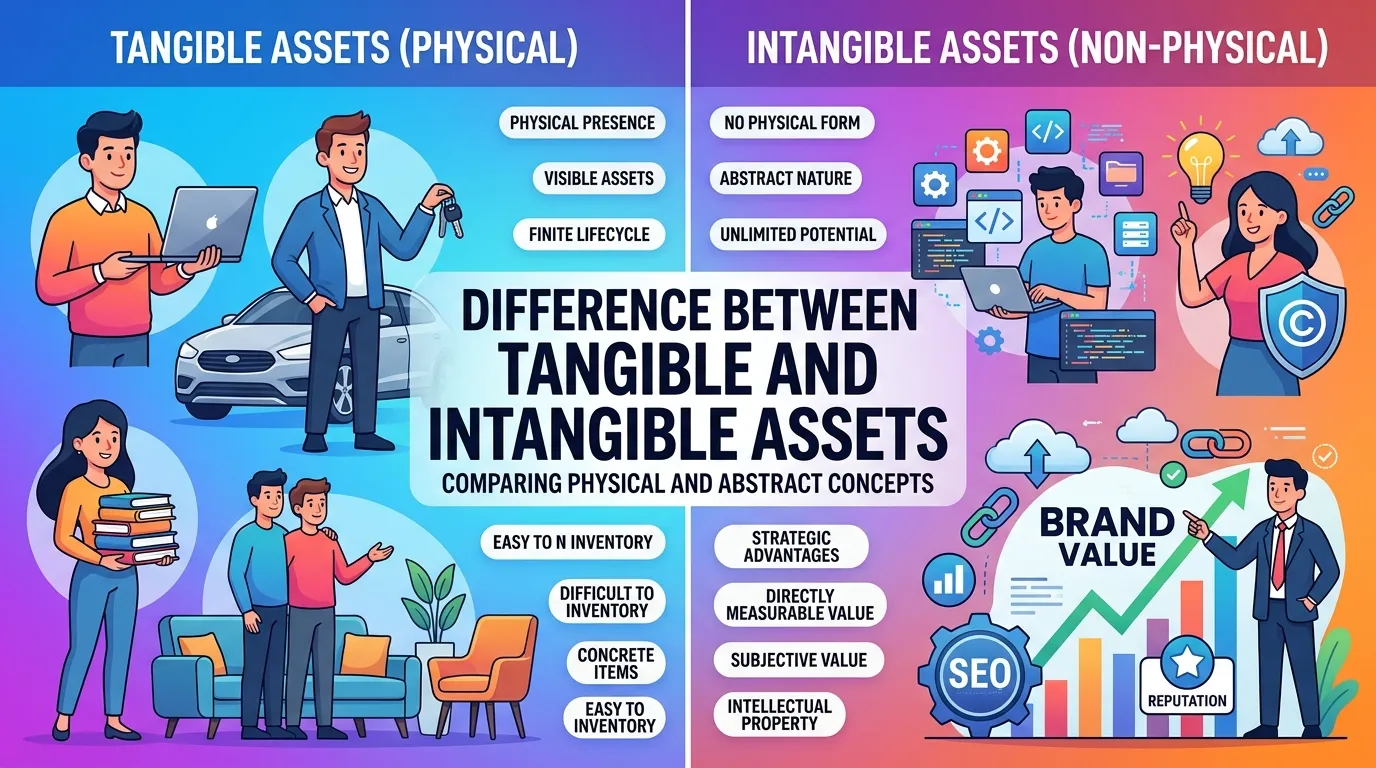
Many users get confused about the difference between tangible and intangible because both terms are used in business, accounting, marketing, law, and even daily life. In simple words, tangible things can be touched physically, while intangible things cannot be touched but still have value.
Understanding the difference between tangible and intangible is important because companies like Google, Meta, and YouTube heavily rely on intangible assets such as brand value, software, and intellectual property. At the same time, they also own tangible assets like offices, servers, and equipment.
If you have ever wondered:
- “What is tangible and intangible?”
- “How do tangible and intangible assets work?”
- “Why do businesses value intangible things so highly?”
then this guide will explain everything clearly with real-life examples, comparison tables, expert insights, and beginner-friendly explanations.
Quick Answer: Difference Between Tangible and Intangible
The main difference between tangible and intangible is physical existence.
- Tangible things can be seen and touched physically.
- Intangible things cannot be touched but still hold importance or value.
Example:
- A laptop is tangible because you can touch it.
- A software license is intangible because it exists digitally or legally, not physically.
Definition of Tangible and Intangible
- Tangible: Something that has a physical form and can be touched, seen, or measured physically.
- Intangible: Something that has no physical presence but still carries value, meaning, or function.
Simple Example:
- Tangible → Car, phone, building
- Intangible → Reputation, copyright, software, goodwill
Pronunciation of Both Terms
| Word | US Pronunciation | UK Pronunciation |
| Tangible | TAN-juh-bul | TAN-juh-bul |
| Intangible | in-TAN-juh-bul | in-TAN-juh-bul |
Now that the meanings are clear, let’s understand the deeper logic behind the difference between tangible and intangible in real-world situations.
Tangible vs Intangible Comparison Table
| Feature | Tangible | Intangible |
| Physical Presence | Has physical form | No physical form |
| Can Be Touched? | Yes | No |
| Visibility | Visible physically | Often invisible |
| Examples | Furniture, machines, land | Patents, trademarks, reputation |
| Business Value | Easy to measure | Sometimes harder to measure |
| Depreciation | Usually depreciates physically | May appreciate or lose value over time |
| Ownership Proof | Physical possession possible | Usually legal or digital ownership |
| Usage | Manufacturing, offices, products | Branding, software, copyrights |
This table gives a quick understanding of the difference between tangible and intangible assets and concepts.
Key Differences Explained Between Tangible and Intangible
1. Physical Existence
The biggest difference is physical presence.
- Tangible items physically exist.
- Intangible items exist conceptually, digitally, or legally.
Real Example:
A smartphone is tangible, but the operating system inside it is intangible.
2. Measurement and Valuation
Tangible assets are easier to measure because their market value is visible.
Intangible assets often depend on perception, reputation, or intellectual property rights.
Example:
A factory building has a measurable market price, while brand reputation is harder to calculate.
3. Wear and Tear
Tangible items usually wear out over time.
Intangible things normally do not physically deteriorate.
Example:
A machine becomes old, but a trademark can stay valuable for decades.
4. Business Importance
Modern businesses increasingly depend on intangible value.
Tech companies especially rely more on software, algorithms, patents, and branding.
Example:
Instagram has enormous intangible value through its brand, user engagement, and platform technology.
5. Ownership Structure
Tangible ownership often involves physical control.
Intangible ownership is usually protected legally.
Example:
You can physically hold a book, but copyright ownership is intangible.
6. Financial Reporting
Accounting systems treat tangible and intangible assets differently.
Companies report:
- buildings
- machinery
- land
as tangible assets, while:
- patents
- trademarks
- software
are treated as intangible assets.
7. Emotional and Psychological Value
Some intangible things carry emotional importance.
Example:
Trust, loyalty, and brand image influence buying behavior even though they cannot be touched physically.
Why Does the Difference Between Tangible and Intangible Matter?
Many beginners think this topic only matters in accounting, but it affects daily life and business decisions everywhere.
In Business
Companies use both:
- tangible resources for operations
- intangible resources for growth and influence
Example:
Apple owns tangible factories and stores, but much of its market power comes from intangible brand loyalty.
In Digital Economy
Modern digital businesses rely heavily on intangible assets.
Platforms like:
- Netflix
- Spotify
- TikTok
gain value mainly from:
- algorithms
- software systems
- user engagement
- intellectual property
In Personal Life
Even personal achievements can involve both concepts.
Example:
- A university degree certificate is tangible.
- Knowledge and skills gained are intangible.
What Are Tangible Assets?
Tangible assets are physical resources owned by a person or company.
Common Tangible Assets
- Buildings
- Vehicles
- Computers
- Equipment
- Furniture
- Inventory
Why Businesses Need Them
Without tangible assets, companies cannot operate physically.
For example:
- warehouses store products
- machines produce goods
- offices support employees
What Are Intangible Assets?
Intangible assets are non-physical resources that still create value.
Common Intangible Assets
- Trademarks
- Copyrights
- Software
- Patents
- Brand reputation
- Customer loyalty
Why Intangible Assets Matter More Today
In modern digital industries, intangible assets often become more valuable than physical assets.
Example:
Google generates enormous value through:
- search algorithms
- data systems
- AI technology
- brand authority
Most of these are intangible.
How Businesses Use Tangible and Intangible Assets Together
In real scenarios, businesses combine both.
Example: Restaurant Business
Tangible:
- tables
- kitchen equipment
- building
Intangible:
- restaurant reputation
- customer trust
- recipes
- brand identity
A successful business needs both working together.
Common Mistakes With Tangible and Intangible
1. Thinking Intangible Means “Not Valuable”
This is false.
Some intangible assets are worth billions.
Fix:
Understand that modern digital businesses rely heavily on intangible value.
2. Confusing Digital With Tangible
Digital products are usually intangible even though they appear on screens.
Example:
Software is intangible.
3. Ignoring Brand Value
Many beginners underestimate branding.
Fix:
Brand trust directly affects sales and customer loyalty.
4. Assuming Tangible Assets Are Always More Important
In today’s economy, intangible assets can create bigger competitive advantages.
5. Mixing Ownership Concepts
Physical possession does not always mean legal ownership.
Example:
A downloaded movie file may exist physically on a device, but copyright remains intangible.
Real-Life Examples of Tangible and Intangible
1. Smartphone Industry
Tangible:
Phone hardware
Intangible:
Operating system, patents, software ecosystem
2. Education
Tangible:
Books, classrooms
Intangible:
Knowledge, learning skills
3. Social Media Platforms
Tangible:
Data centers and office buildings
Intangible:
Algorithms, user trust, platform popularity
Example:
Meta relies heavily on intangible digital ecosystems.
4. Fashion Industry
Tangible:
Clothing inventory
Intangible:
Brand image and designer reputation
5. Entertainment Industry
Tangible:
Cameras and studios
Intangible:
Creative rights, music licenses, audience loyalty
When to Use Each
Use Tangible Concepts When:
- discussing physical products
- measuring physical assets
- managing inventory
- calculating depreciation
Use Intangible Concepts When:
- discussing software
- branding
- intellectual property
- digital services
- reputation management
Why People Get Confused in Tangible and Intangible
1. Digital Technology Changed Business Logic
People often assume visible screen-based products are tangible.
But software and online systems remain intangible.
2. Marketing Creates Invisible Value
Companies invest heavily in emotional branding.
Consumers feel connected to brands even though the value is intangible.
3. Accounting Terminology Is Complex
Financial reporting uses specialized terms that confuse beginners.
4. Physical and Non-Physical Often Work Together
Most real-world systems combine both forms.
This overlap creates confusion.
Expert Insight
In practical business environments, tangible assets create operational stability, while intangible assets drive long-term competitive advantage.
Most beginners focus only on physical ownership because it feels more “real.” However, in today’s digital economy, companies with strong intangible assets often dominate markets faster.
For example:
- software ecosystems
- patents
- AI systems
- audience trust
- platform authority
can generate more long-term growth than physical infrastructure alone.
That is why modern investors increasingly analyze intangible value when evaluating businesses.
Frequently Asked Questions (FAQs)
What is the basic difference between tangible and intangible?
Tangible things can be touched physically, while intangible things cannot be physically touched.
Is software tangible or intangible?
Software is considered intangible because it has no physical form.
Can intangible assets have value?
Yes. Some intangible assets like patents and brand reputation are extremely valuable.
What are examples of tangible assets?
Buildings, vehicles, inventory, and machinery are common examples.
Why are intangible assets important today?
Modern digital businesses depend heavily on software, branding, and intellectual property.
Is goodwill tangible or intangible?
Goodwill is an intangible asset because it represents reputation and customer trust.
Are digital files tangible?
Usually no. Digital files are generally categorized as intangible.
Which is more valuable: tangible or intangible?
It depends on the industry. In technology sectors, intangible assets often hold greater value.
Can a company survive without intangible assets?
Very difficult in modern markets because branding, trust, and technology are essential.
Why do accounting systems separate tangible and intangible assets?
Because both assets behave differently in valuation, depreciation, and legal treatment.
Conclusion
Understanding the difference between tangible and intangible is essential in today’s digital and business-driven world. Tangible items are physical and touchable, while intangible items exist without physical form but still carry real value.
In simple words:
- tangible supports physical operations
- intangible drives identity, innovation, and long-term growth
Modern companies such as Google, Meta, and Apple prove how important intangible assets have become in the modern economy.
Once you clearly understand the difference between tangible and intangible, many confusing business, accounting, and technology concepts become much easier to understand.

Sarfraz Ahmad is language researcher and content writer who specializes in explaining the difference between commonly confused English words. Through WordClearify, learners understand subtle word distinctions in a simple, structured, and practical way. My writing focuses on clarity, real-life examples, and easy comparisons for students, bloggers, and professionals worldwide.