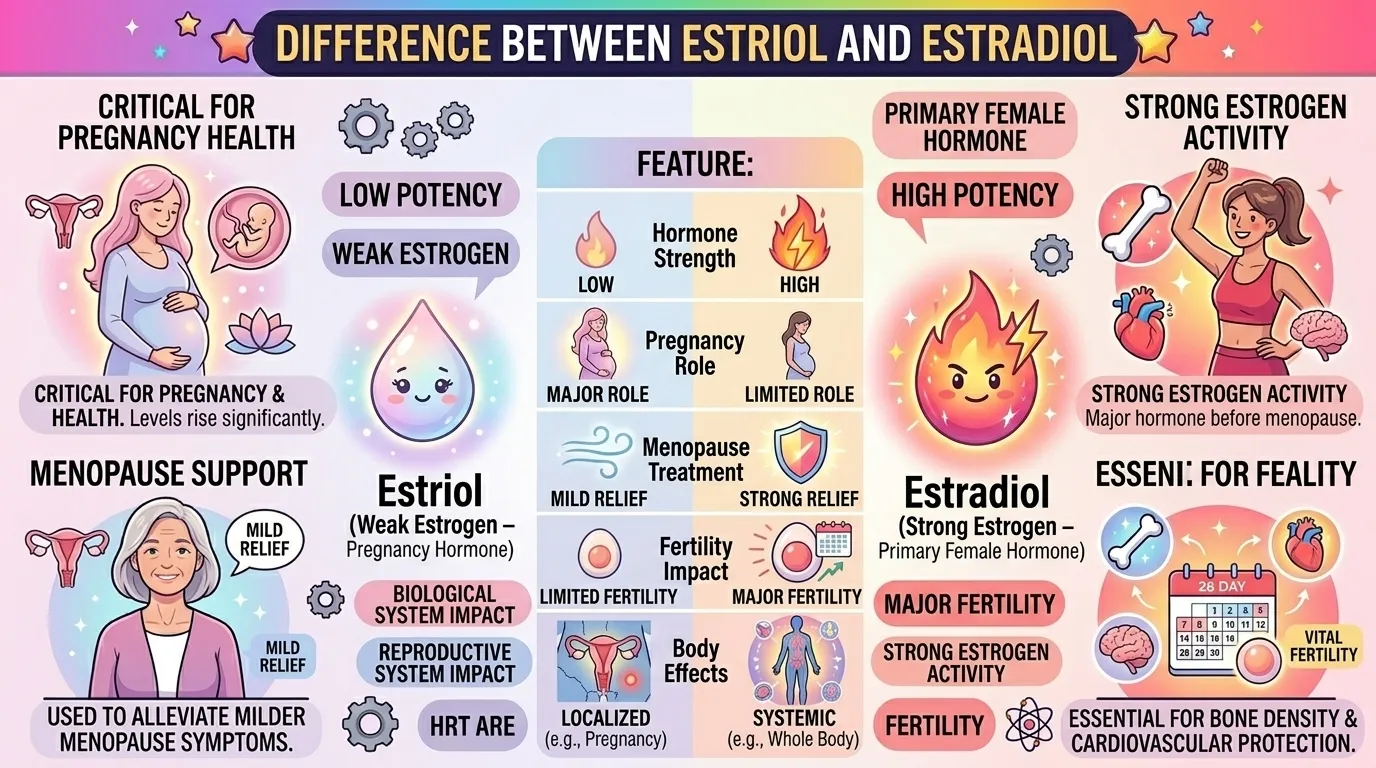
Many users get confused about the difference between estriol and estradiol because both are forms of estrogen hormones found in the human body. In simple words, estradiol is the strongest and most active estrogen during reproductive years, while estriol is a weaker estrogen mainly linked with pregnancy and menopause support.
Understanding the difference between estriol and estradiol matters because these hormones affect fertility, mood, bone health, skin, energy, and hormone replacement therapy decisions.
Today, more people search terms like “estriol vs estradiol,” “which estrogen is safer,” and “how does estrogen therapy work” because hormone balance has become a major health topic across Google, YouTube, and modern wellness platforms.
In this guide, you will learn the complete difference between estriol and estradiol, how they work, when doctors use them, possible risks, and real-life hormone therapy examples.
Quick Answer: Difference Between Both
The main difference between estriol and estradiol is strength and function. Estradiol is the most powerful estrogen hormone in the female body and plays a major role in menstrual cycles, fertility, and bone health. Estriol is much weaker and is mostly produced during pregnancy.
For example, doctors may prescribe estradiol patches for menopause symptoms, while estriol creams are sometimes used for vaginal dryness and gentler hormone support.
Definition of Estriol and Estradiol
- Estriol: A weak form of estrogen mainly produced during pregnancy. It has milder effects on the body and is often used in low-dose hormone therapies.
- Estradiol: The strongest and most active form of estrogen during reproductive years. It controls menstrual cycles, fertility, and many female body functions.
Example: Estradiol strongly affects ovulation, while estriol has a softer hormonal effect.
Pronunciation of Both
- Estriol (US): ES-tree-all
- Estriol (UK): ES-tree-ol
- Estradiol (US): es-truh-DYE-all
- Estradiol (UK): es-truh-DYE-ol
Now that the basic definitions are clear, let’s understand the real medical and practical differences between estriol and estradiol in detail.
Estriol vs Estradiol Table
| Feature | Estriol | Estradiol | Similarity |
| Hormone Strength | Weak estrogen | Strong estrogen | Both are estrogen hormones |
| Main Production | Mostly during pregnancy | Reproductive years | Both are naturally produced |
| Biological Effect | Mild hormonal activity | Powerful hormonal activity | Both affect estrogen receptors |
| Common Use | Vaginal creams and gentle therapy | Menopause and hormone replacement therapy | Both can treat estrogen deficiency |
| Pregnancy Role | High during pregnancy | Important before pregnancy | Both support female health |
| Risk Level | Usually lower estrogenic activity | Stronger body response | Both require medical supervision |
| Impact on Fertility | Limited direct effect | Major role in ovulation | Both influence reproductive system |
| Medical Prescription | Often compounded or topical | Widely FDA-approved forms | Both are hormone medications |
This table clearly shows the difference and similarity between estriol and estradiol for quick understanding.
KEY DIFFERENCES EXPLAINED BETWEEN ESTRIOL AND ESTRADIOL
1. Hormone Strength
Estradiol is much stronger than estriol. It binds more strongly to estrogen receptors in the body.
Real-life example: Women with severe hot flashes often respond better to estradiol therapy.
2. Role During Pregnancy
Estriol levels rise significantly during pregnancy because the placenta produces it.
Example: Doctors sometimes monitor estriol levels in prenatal testing.
3. Menopause Treatment Style
Estriol is commonly used for localized menopause symptoms like vaginal dryness, while estradiol may treat broader symptoms like mood swings and night sweats.
4. Effect on Bones
Estradiol helps maintain bone density and reduces osteoporosis risk more effectively.
Practical use: Postmenopausal women with bone loss are often prescribed estradiol-based therapy.
5. Side Effect Potential
Because estradiol is stronger, it may increase risks like breast tenderness, bloating, or blood clot concerns in some patients.
Estriol generally has milder effects.
6. Scientific Research Availability
Estradiol has more clinical studies and global medical approval than estriol.
This is why many healthcare systems prefer estradiol in standard hormone replacement therapy protocols.
7. Estrogen Receptor Activity
Estradiol strongly activates estrogen receptors throughout the body, while estriol has weaker receptor binding.
This difference affects treatment intensity and long-term outcomes.
What Is Estradiol and Why Is It Important?
Estradiol is the primary female sex hormone during reproductive years. It controls:
- Ovulation
- Menstrual cycles
- Fertility
- Skin elasticity
- Bone strength
- Brain function
Without healthy estradiol levels, many women experience:
- Fatigue
- Irregular periods
- Low libido
- Mood changes
- Hot flashes
In modern healthcare systems, estradiol is widely used in hormone replacement therapy (HRT). Pharmaceutical companies and healthcare platforms often discuss estradiol treatments because menopause awareness has increased globally.
What Is Estriol Mainly Used For?
Estriol is commonly associated with:
- Pregnancy hormone changes
- Vaginal estrogen creams
- Mild menopause symptom relief
- Localized estrogen therapy
Some hormone specialists prefer estriol for women who want lower-strength estrogen support.
Why Do People Get Confused Between Estriol and Estradiol?
Many users search “estriol vs estradiol” because the names sound very similar. The confusion also happens because:
- Both belong to the estrogen family
- Both may appear in menopause therapy discussions
- Online wellness blogs sometimes mix them together
- Social media influencers oversimplify hormone therapy
Platforms like YouTube and wellness communities often create confusion by promoting one hormone as universally “safe” or “better.”
How Does Hormone Replacement Therapy Use Estriol and Estradiol?
Hormone replacement therapy works by restoring estrogen levels when the body naturally declines during menopause.
Estradiol in HRT
Estradiol is commonly prescribed through:
- Patches
- Pills
- Gels
- Sprays
It helps with:
- Hot flashes
- Night sweats
- Mood swings
- Bone protection
Estriol in HRT
Estriol is usually prescribed as:
- Vaginal creams
- Suppositories
- Compounded hormone creams
It mainly helps with:
- Vaginal dryness
- Urinary discomfort
- Mild estrogen support
Which Is Stronger: Estriol or Estradiol?
The answer is clear: estradiol is significantly stronger.
Estradiol has a more powerful biological effect because it strongly activates estrogen receptors across the body.
Many beginners searching Google ask:
“Is estriol safer because it is weaker?”
The reality is more complex. Lower strength does not automatically mean safer for every person. Treatment decisions depend on medical history, age, cancer risk, cardiovascular health, and symptom severity.
Difference Between Estriol and Estradiol in Menopause
Menopause is one of the biggest reasons people research estrogen hormones.
Estradiol for Menopause
Doctors often recommend estradiol for:
- Severe hot flashes
- Sleep issues
- Mood instability
- Bone density support
Estriol for Menopause
Estriol may be used for:
- Vaginal dryness
- Sensitive patients
- Mild symptoms
- Local estrogen therapy
In real scenarios, some women use both under medical supervision.
Can Estriol and Estradiol Be Used Together?
Yes, in some hormone therapy plans, doctors combine estriol and estradiol.
This approach may balance:
- Strong symptom relief
- Gentler tissue support
- Vaginal health
- Overall estrogen management
However, combination therapy requires professional monitoring.
Self-medication with hormones can be dangerous.
Common Mistakes with Estriol and Estradiol
| Mistake | Correction |
| Thinking all estrogen hormones are identical | Each estrogen type works differently |
| Assuming weaker means completely safe | Even mild hormones need medical guidance |
| Using online advice without testing hormones | Blood work and doctor evaluation matter |
| Ignoring side effects | Monitor symptoms carefully |
| Choosing hormones based on social media trends | Use evidence-based medical advice |
| Confusing compounded therapy with FDA-approved therapy | They are not always the same |
Real Life Examples with Estriol and Estradiol
1. Menopause Hot Flashes
A 52-year-old woman with severe night sweats may receive estradiol patches because stronger estrogen relief is needed.
2. Vaginal Dryness
A patient with localized menopause symptoms may use estriol cream for targeted relief.
3. Pregnancy Hormone Testing
Doctors may measure estriol levels during pregnancy assessments.
4. Bone Density Support
Women with osteoporosis risk often benefit more from estradiol therapy.
5. Hormone Sensitivity
Some women sensitive to stronger estrogen effects prefer lower-dose estriol approaches.
When to Use Each Hormone
| Situation | Better Option |
| Severe menopause symptoms | Estradiol |
| Vaginal dryness only | Estriol |
| Bone protection | Estradiol |
| Pregnancy monitoring | Estriol |
| Strong hormonal replacement needs | Estradiol |
| Mild local therapy | Estriol |
The best hormone always depends on individual health needs.
Frequently Asked Questions
What is the main difference between estriol and estradiol?
Estradiol is a strong estrogen hormone, while estriol is weaker and mainly associated with pregnancy and localized hormone support.
Which is safer, estriol or estradiol?
Neither is universally safer. Safety depends on dosage, health history, age, and treatment goals.
Is estradiol stronger than estriol?
Yes, estradiol is significantly stronger and more biologically active.
Why do doctors prescribe estradiol?
Doctors prescribe estradiol for menopause symptoms, bone protection, fertility support, and hormone replacement therapy.
Can estriol help menopause symptoms?
Yes, estriol may help vaginal dryness and mild menopause discomfort.
Can you take estriol and estradiol together?
Some doctors combine them in hormone therapy, but this requires professional supervision.
Does estradiol increase breast cancer risk?
Some studies suggest certain estrogen therapies may influence risk factors. Medical evaluation is important before treatment.
Why are estrogen hormones important?
They support reproductive health, bone strength, skin health, mood, and cardiovascular function.
Which estrogen is best for menopause?
The best option depends on symptom severity, medical history, and treatment goals.
Conclusion
Understanding the difference between estriol and estradiol is important for anyone researching menopause, hormone replacement therapy, fertility, or women’s health. In simple terms, estradiol is the strongest and most active estrogen hormone, while estriol is weaker and mostly connected with pregnancy and mild localized hormone support.
Estradiol is commonly used for stronger menopause symptom relief and bone health, while estriol is often chosen for gentler estrogen support. Both hormones play important roles in the body, yet they work differently and serve different medical purposes.
In real-world healthcare, there is no universal “best” estrogen. Doctors choose hormone therapy based on symptoms, age, health risks, and treatment goals. This is why personalized medical guidance matters more than online trends or social media advice.

Sarfraz Ahmad is language researcher and content writer who specializes in explaining the difference between commonly confused English words. Through WordClearify, learners understand subtle word distinctions in a simple, structured, and practical way. My writing focuses on clarity, real-life examples, and easy comparisons for students, bloggers, and professionals worldwide.