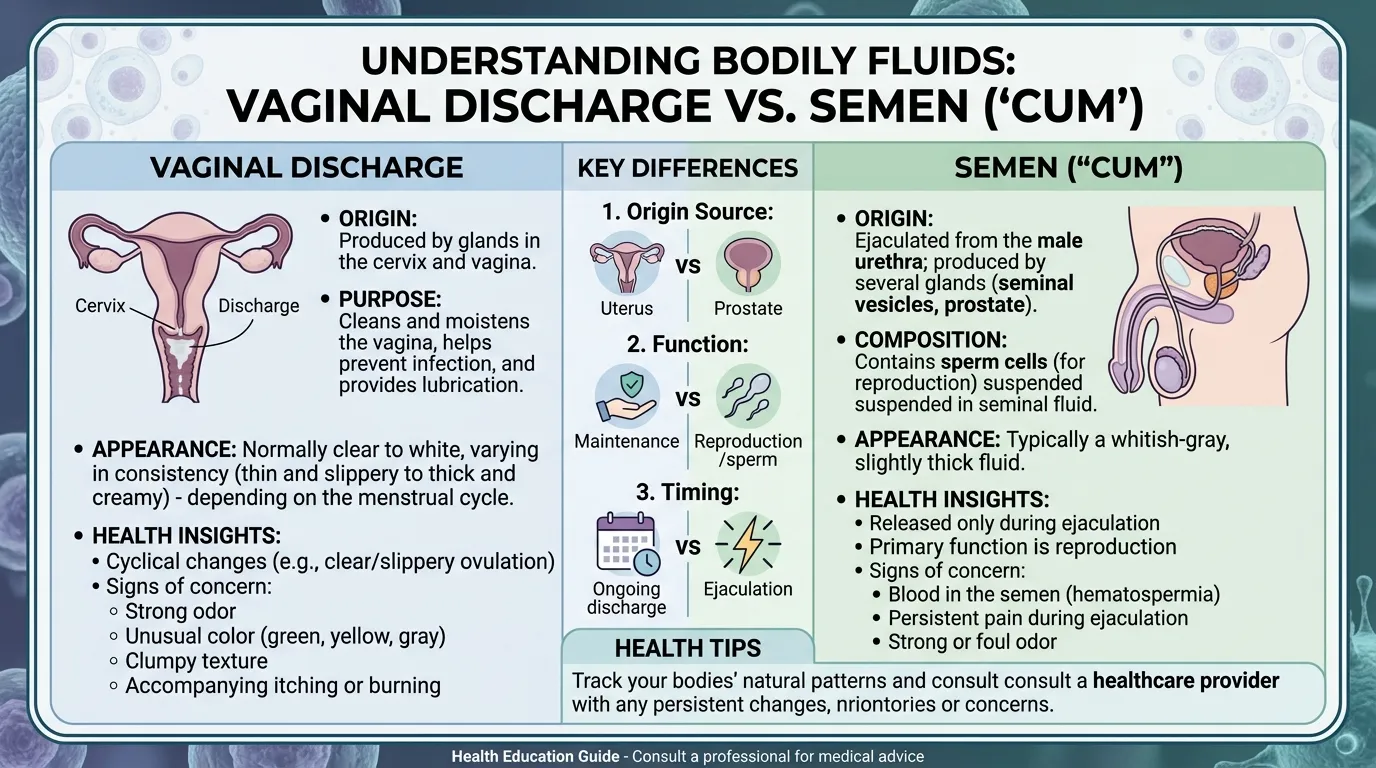
Many people feel confused when they hear the terms discharge and cum, especially because both relate to fluids released from the body. However, these two terms are not the same—they differ in meaning, usage, biological function, and medical significance.
The key point is simple: discharge is a broad medical term, while cum is a specific slang term for semen released during ejaculation. Understanding this difference is important for health awareness, hygiene, and recognizing potential medical issues.
In everyday life, discharge can be completely normal (especially in females), but in some cases, it may indicate an infection or imbalance. On the other hand, cum is a natural part of the male reproductive process and occurs during sexual climax.
In this detailed guide, we will explore the difference between discharge and cum, including meanings, biological roles, types, health implications, and when you should seek medical advice.
What is Discharge?
Discharge is a medical term used to describe any fluid released from the body. It can occur in different parts of the body, but it is most commonly associated with the vagina or penis.
Types of Discharge:
- Vaginal Discharge (Females)
- Usually normal and healthy
- Helps clean and protect the reproductive system
- Typically clear, white, or slightly milky
- Penile Discharge (Males)
- Not always normal
- May occur due to infections or medical conditions
Key Functions:
- Maintains hygiene and cleanliness
- Removes dead cells and bacteria
- Keeps tissues moist and healthy
Important: Not all discharge is bad—many forms are completely natural and necessary.
What is Cum?
Cum is a slang term used to describe semen, the fluid released from the male reproductive system during ejaculation.
What Does Semen Contain?
- Sperm cells
- Fluids from reproductive glands
- Nutrients that help sperm survive
Key Function:
- Plays a role in reproduction
- Transports sperm during ejaculation
In simple words: Cum = Semen released during orgasm
Quick Comparison Table
| Feature | Discharge | Cum |
| Meaning | General body fluid | Semen |
| Usage | Medical term | Slang |
| Gender | Both | Mostly male |
| Purpose | Hygiene & protection | Reproduction |
| Frequency | Regular | During ejaculation |
| Health Role | Can be normal or abnormal | Usually normal |
15 Key Differences Between Discharge and Cum with Examples
1. Meaning and Scope
Discharge is a broad medical term used for any fluid released from the body, especially from the reproductive organs. It can be normal or abnormal depending on the situation.
Cum is a specific slang term that refers only to semen released during ejaculation.
Example:
A woman noticing daily clear fluid is experiencing normal discharge, while a man releasing fluid during orgasm is cum (semen).
2. Medical vs Informal Usage
Discharge is used in medical language by doctors and healthcare professionals.
Cum is an informal/slang word, not used in clinical settings.
Example:
A doctor will say, “There is abnormal discharge,” not “cum.”
3. Occurrence in Females
In females, discharge is natural and common, helping maintain reproductive health.
Cum is not produced by the female body; it refers to male semen that may be present after intercourse.
Example:
White fluid before periods = discharge
Fluid after sex = semen (cum)
4. Occurrence in Males
Discharge in males outside of ejaculation is usually abnormal and may signal infection.
Cum is a normal biological process during sexual climax.
Example:
Unexpected fluid leakage = discharge (possible issue)
Fluid during orgasm = cum (normal)
5. Purpose and Function
Discharge helps with cleaning, lubrication, and protection of body tissues.
Cum plays a role in reproduction, carrying sperm.
Example:
Vaginal discharge keeps the area clean
Semen helps fertilization
6. Appearance and Texture
Discharge can be clear, white, or slightly sticky and may change during the cycle.
Cum is usually thick, white, and uniform.
Example:
Stretchy clear fluid = ovulation discharge
Thick white fluid = cum
7. Frequency
Discharge can occur daily or regularly, especially in females.
Cum occurs only during ejaculation.
Example:
Daily fluid = discharge
Only during sex = cum
8. Health Implications
Discharge can be normal or a sign of infection, depending on symptoms.
Cum is usually normal unless there are unusual signs.
Example:
Yellow, smelly discharge = infection
Painful ejaculation = medical concern
9. Composition
Discharge contains cells, bacteria, and natural fluids.
Cum contains sperm and reproductive gland fluids.
Example:
Discharge supports natural balance
Semen supports reproduction
10. Relationship Between Them
Cum is a type of discharge, but discharge includes many other fluids.
Example:
All semen is discharge, but not all discharge is semen.
11. Trigger Mechanism
Discharge occurs naturally due to hormones or body processes.
Cum is triggered by sexual stimulation and orgasm.
Example:
Hormonal cycle → discharge
Sexual climax → cum
12. Hygiene and Monitoring
Discharge should be monitored regularly to detect changes in health.
Cum usually does not require monitoring unless abnormal.
Example:
Change in smell or color = check discharge
Normal ejaculation = no concern
13. Warning Signs
Abnormal discharge may include itching, burning, or bad odor.
Cum may be concerning only if there is blood or pain.
Example:
Green discharge = possible infection
Blood in semen = doctor visit needed
14. 🌍 Usage Context
Discharge is used in healthcare, education, and medical discussions.
Cum is used in casual or informal conversations.
Example:
Medical report → discharge
Casual talk → cum
15. Biological Role
Discharge supports body maintenance and protection.
Cum supports reproduction and fertility.
xample:
Discharge protects tissues
Semen carries sperm for pregnancy
Simple Summary
- Discharge = General body fluid (medical term)
- Cum = Specific reproductive fluid (semen)
.
Types of Discharge (Important for Health)
Normal Discharge:
- Clear or white
- Mild or no odor
- No itching or pain
Abnormal Discharge:
- Yellow, green, or gray color
- Strong or unpleasant smell
- Accompanied by itching, burning, or pain
If abnormal symptoms appear, medical advice is recommended.
When Should You Be Concerned?
You should consider seeing a healthcare professional if:
- Discharge changes color or smell
- There is pain, itching, or burning
- There is unusual discharge in males
- Blood appears in semen
Early diagnosis helps prevent complications.
Simple Way to Remember
- Discharge = Medical term (normal or abnormal fluid)
- Cum = Semen (specific to ejaculation)
Conclusion
The difference between discharge and cum is mainly about scope and context. Discharge is a broad medical term that includes many types of fluids released by the body, while cum is a specific type of fluid (semen) associated with sexual activity.
Understanding this distinction is important for health awareness, hygiene, and recognizing abnormal symptoms. While most discharge is normal—especially in females—unusual changes should never be ignored. Cum, on the other hand, is a normal part of the reproductive process.
Final takeaway:
- Discharge = General body fluid
- Cum = Specific reproductive fluid
FAQs
1. Is discharge the same as cum?
No, discharge is a general term, while cum specifically refers to semen.
2. Is vaginal discharge normal?
Yes, it is usually normal and helps maintain vaginal health unless symptoms change.
3. Can men have discharge without ejaculation?
Yes, and it may indicate an infection or medical condition that needs attention.
4. Is cum always healthy?
Yes, in most cases. However, pain, blood, or unusual changes should be checked by a doctor.
5. When should I worry about discharge?
If it has a bad smell, unusual color, or causes discomfort, you should seek medical advice.

Sarfraz Ahmad is language researcher and content writer who specializes in explaining the difference between commonly confused English words. Through WordClearify, learners understand subtle word distinctions in a simple, structured, and practical way. My writing focuses on clarity, real-life examples, and easy comparisons for students, bloggers, and professionals worldwide.