Many users get confused when comparing Acrylic vs Plexiglass because the two terms are often used interchangeably. In reality, understanding Acrylic vs Plexiglass is simpler than it seems. Plexiglass is actually a brand name, while acrylic is the general material.
If you’ve ever searched for the difference between acrylic and plexiglass, wondered which is stronger, or tried to decide which one is best for signs, windows, displays, or DIY projects, you’re not alone.
In this complete guide, you’ll learn what acrylic and plexiglass are, how they compare, where each is used, their advantages and limitations, and how to choose the right option for your specific needs. By the end, you’ll have a clear answer without needing another article.
Quick Answer: Acrylic vs Plexiglass
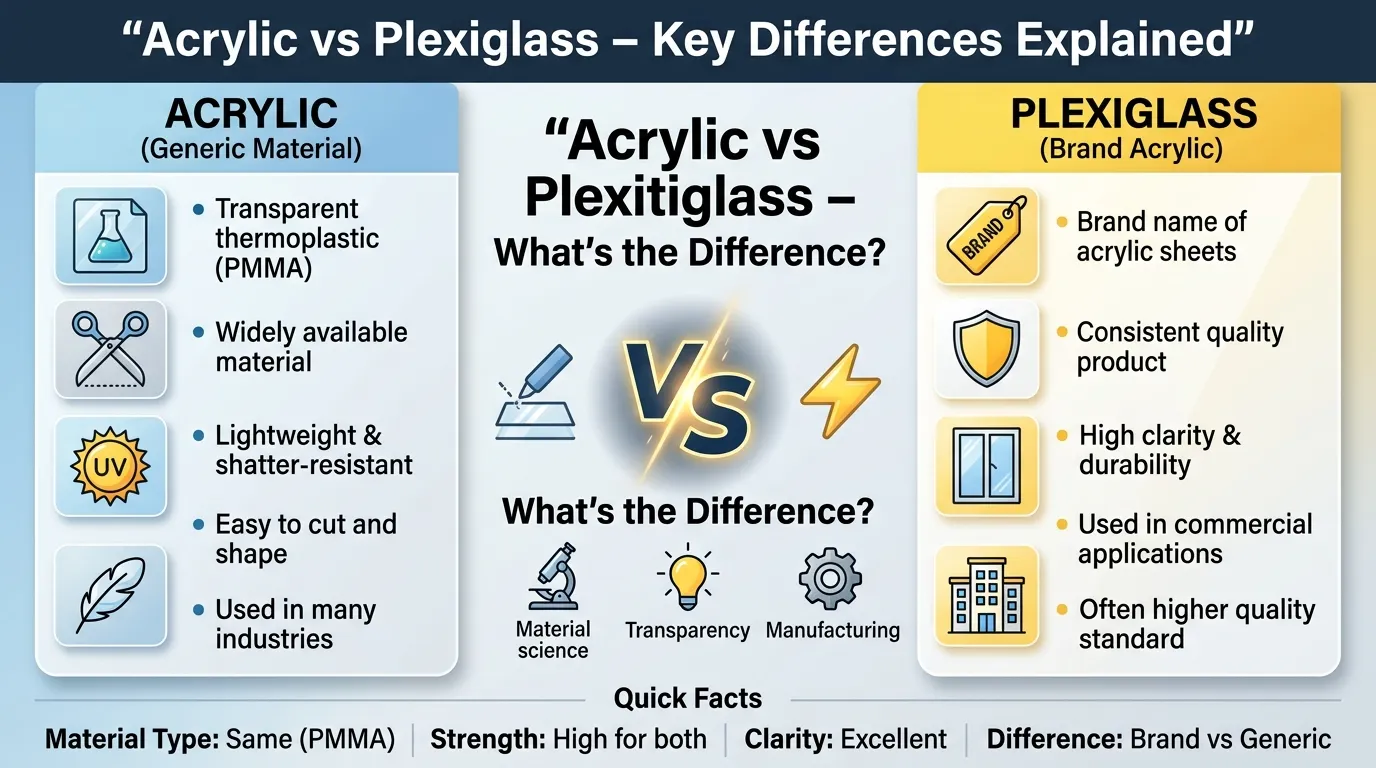
Acrylic is a transparent plastic material made from polymethyl methacrylate (PMMA), while Plexiglass is a branded version of acrylic.
For example, saying “Plexiglass” is similar to saying “Kleenex” for tissues. Every Plexiglass sheet is acrylic, but not every acrylic sheet is Plexiglass.
Definition of Acrylic vs Plexiglass
- Acrylic: A clear thermoplastic material (PMMA) known for high transparency, weather resistance, and lightweight durability.
- Plexiglass: A trademarked brand of acrylic sheet manufactured to specific quality standards.
Example: A clear display case at a retail store may be made from generic acrylic or branded Plexiglass.
Pronunciation of Both Terms
Acrylic
- US: uh-KRIL-ik
- UK: uh-KRIL-ik
Plexiglass
- US: PLEK-see-glass
- UK: PLEK-see-glass
Now that the terminology is clear, let’s understand how these materials compare in practical applications.
Acrylic vs Plexiglass Comparison Table
| Feature | Acrylic | Plexiglass |
|---|---|---|
| Meaning | General plastic material | Brand name of acrylic |
| Material Type | PMMA | PMMA |
| Transparency | Excellent clarity | Excellent clarity |
| Strength | High impact resistance | High impact resistance |
| Weather Resistance | Excellent | Excellent |
| Manufacturing | Produced by many companies | Produced under specific brand standards |
| Price | Usually varies by supplier | Sometimes slightly premium |
| Availability | Widely available | Available through authorized suppliers |
| Applications | Signs, displays, windows | Signs, displays, windows |
| Quality Consistency | Depends on manufacturer | Controlled by brand standards |
Key Differences Explained Between Acrylic vs Plexiglass
1. Generic Material vs Brand Name
The biggest difference between acrylic and plexiglass is terminology.
Acrylic refers to the material itself, while Plexiglass refers to a branded product made from acrylic.
Real-life example: Similar to how people use “Google” as a verb for searching online, many use Plexiglass as a generic term for acrylic sheets.
2. Manufacturing Standards
Different acrylic manufacturers may use different production methods.
Plexiglass products often follow specific brand-controlled standards.
User insight: Businesses requiring consistent quality often prefer recognized brands.
3. Market Recognition
Plexiglass enjoys stronger brand recognition.
Many contractors, architects, and consumers recognize the name instantly.
4. Product Availability
Generic acrylic is available from hundreds of suppliers worldwide.
Plexiglass products may be limited to approved distributors.
5. Cost Differences
Some branded Plexiglass products can cost slightly more because of brand reputation and quality control.
6. Consumer Perception
Many buyers assume Plexiglass is a completely different material, which creates confusion.
In simple words, they are fundamentally the same material.
7. Commercial Applications
Large commercial projects may specify certain brands for compliance and consistency.
What Is Acrylic and How Does It Work?
Acrylic is a synthetic plastic developed as a lightweight alternative to glass.
It consists primarily of PMMA (Polymethyl Methacrylate), a material valued for:
- Optical clarity
- UV resistance
- Lightweight design
- Easy fabrication
- Durability
Acrylic allows up to approximately 92% light transmission, making it one of the clearest plastics available today.
Because of these properties, acrylic appears in:
- Retail displays
- Aquariums
- Skylights
- Protective barriers
- Signage systems
- Interior design projects
What Is Plexiglass and Why Is It So Popular?
Plexiglass became widely recognized because of its long-standing reputation in construction, manufacturing, and commercial industries.
The brand gained popularity due to:
- Consistent quality
- Reliable performance
- Strong optical clarity
- Commercial trust
In practical use, many people ask for Plexiglass even when they simply mean acrylic sheet material.
This brand recognition works similarly to how consumers recognize platforms like Google, YouTube, Instagram, and Meta products by brand rather than technical specifications.
Acrylic vs Plexiglass: Which Is Stronger?
This question appears frequently in search results.
The answer is straightforward:
Since Plexiglass is acrylic, their strength is generally very similar.
However, actual performance depends on:
- Thickness
- Manufacturing process
- Quality control
- Intended application
For impact resistance:
- Acrylic is approximately several times more impact resistant than traditional glass.
- It is less likely to shatter into dangerous sharp pieces.
Acrylic vs Plexiglass for Outdoor Use
Outdoor applications require materials that can handle:
- UV exposure
- Rain
- Temperature fluctuations
- Wind loads
Both acrylic and Plexiglass perform exceptionally well outdoors.
Common outdoor uses include:
- Business signs
- Storefront displays
- Outdoor barriers
- Architectural glazing
One reason architects continue choosing acrylic is its excellent weather resistance over long periods.
Acrylic vs Plexiglass for Signs and Displays
If you’ve visited shopping malls, airports, or trade shows, you’ve likely seen acrylic products everywhere.
Common examples include:
Retail Displays
Stores use acrylic stands because they are lightweight and visually appealing.
Business Signage
Professional signs often use acrylic because of its polished appearance.
Exhibition Booths
Trade show displays benefit from acrylic’s clarity and ease of fabrication.
Protective Covers
Electronics and equipment often use acrylic shields.
Difference and Similarity Table: Acrylic vs Plexiglass
| Feature | Acrylic | Plexiglass | Similarity |
|---|---|---|---|
| Definition | Plastic material | Acrylic brand | Both are PMMA |
| Appearance | Clear and glossy | Clear and glossy | Nearly identical |
| Strength | Durable | Durable | Similar impact resistance |
| Transparency | Excellent | Excellent | High light transmission |
| Usage | General applications | General applications | Used in same industries |
| Weather Resistance | Strong | Strong | Outdoor capable |
| Fabrication | Easy to cut and shape | Easy to cut and shape | Highly workable |
| Cost | Varies | Often slightly higher | Depends on supplier |
This table clearly shows the difference and similarity between Acrylic vs Plexiglass for quick understanding.
Common Mistakes with Acrylic vs Plexiglass
Mistake 1: Thinking They Are Different Materials
Correction: Plexiglass is a type of acrylic.
Mistake 2: Assuming Brand Equals Better Performance
Correction: Performance depends on specifications, not only branding.
Mistake 3: Ignoring Thickness
Correction: Thickness often affects strength more than the brand name.
Mistake 4: Using Generic Terms Incorrectly
Correction: Acrylic is the material category; Plexiglass is one brand.
Mistake 5: Comparing Them Like Glass vs Acrylic
Correction: They are not separate material families.
Real-Life Examples with Acrylic vs Plexiglass
Personal Use
A homeowner installs clear acrylic panels for a patio wind barrier.
Business Use
A retail store uses branded Plexiglass display cases for premium product presentation.
Industrial Use
Factories install protective machine guards made from acrylic sheets.
Architectural Use
Modern buildings use acrylic glazing for lightweight transparency.
Event Industry
Trade show booths rely on acrylic displays for portability and visual appeal.
When to Use Each
Use Acrylic When:
- Budget flexibility matters
- Multiple suppliers are acceptable
- You need custom fabrication
Use Plexiglass When:
- Brand-specific requirements exist
- Consistent sourcing is important
- Project specifications mention the brand
For most users, either option performs similarly if quality standards are comparable.
Why People Get Confused in Acrylic vs Plexiglass
Several factors create confusion:
Brand Dominance
Popular brands often become generic terms.
Industry Language
Professionals sometimes use the names interchangeably.
Online Discussions
Forums and websites frequently blur the distinction.
Marketing Influence
Manufacturers emphasize branding, which can make products seem fundamentally different.
Expert Insight
From a materials and fabrication perspective, the most important factor is not whether a sheet is called acrylic or Plexiglass.
What truly matters is:
- Material grade
- Thickness
- Manufacturing quality
- Intended application
In real-world scenarios, professionals evaluate technical specifications first and branding second.
Most beginners focus heavily on names, while experienced fabricators focus on performance requirements.
That distinction often leads to better purchasing decisions.
Frequently Asked Questions (FAQ)
Is Plexiglass the same as acrylic?
Yes. Plexiglass is a branded form of acrylic.
Which is stronger, acrylic or Plexiglass?
They have very similar strength because they are made from the same base material.
Why is Plexiglass more expensive sometimes?
Brand reputation and manufacturing standards may influence pricing.
Can acrylic replace glass?
Yes. Many applications use acrylic as a lightweight alternative to glass.
Is acrylic waterproof?
Yes. Acrylic resists water and performs well outdoors.
Does acrylic turn yellow over time?
High-quality acrylic offers strong UV resistance and remains clear for years.
Which is better for signs?
Both work exceptionally well for signage.
Is Plexiglass safer than glass?
Generally yes, because it is more impact resistant and less likely to shatter.
Can acrylic be cut at home?
Yes. Many DIY users cut acrylic using specialized tools.
What is PMMA?
PMMA stands for Polymethyl Methacrylate, the material used to create acrylic sheets.
Conclusion
Understanding Acrylic vs Plexiglass becomes much easier once you know that the comparison is largely a matter of terminology rather than material differences. Acrylic is the general category of transparent PMMA plastic, while Plexiglass is a well-known brand within that category.
For most applications—whether you’re building displays, creating signage, installing protective barriers, or working on a DIY project—the key considerations are material quality, thickness, UV resistance, and fabrication requirements rather than the name printed on the sheet.
The final answer is simple: Acrylic vs Plexiglass is essentially a comparison between a material and a brand of that material.

Sarfraz Ahmad is language researcher and content writer who specializes in explaining the difference between commonly confused English words. Through WordClearify, learners understand subtle word distinctions in a simple, structured, and practical way. My writing focuses on clarity, real-life examples, and easy comparisons for students, bloggers, and professionals worldwide.