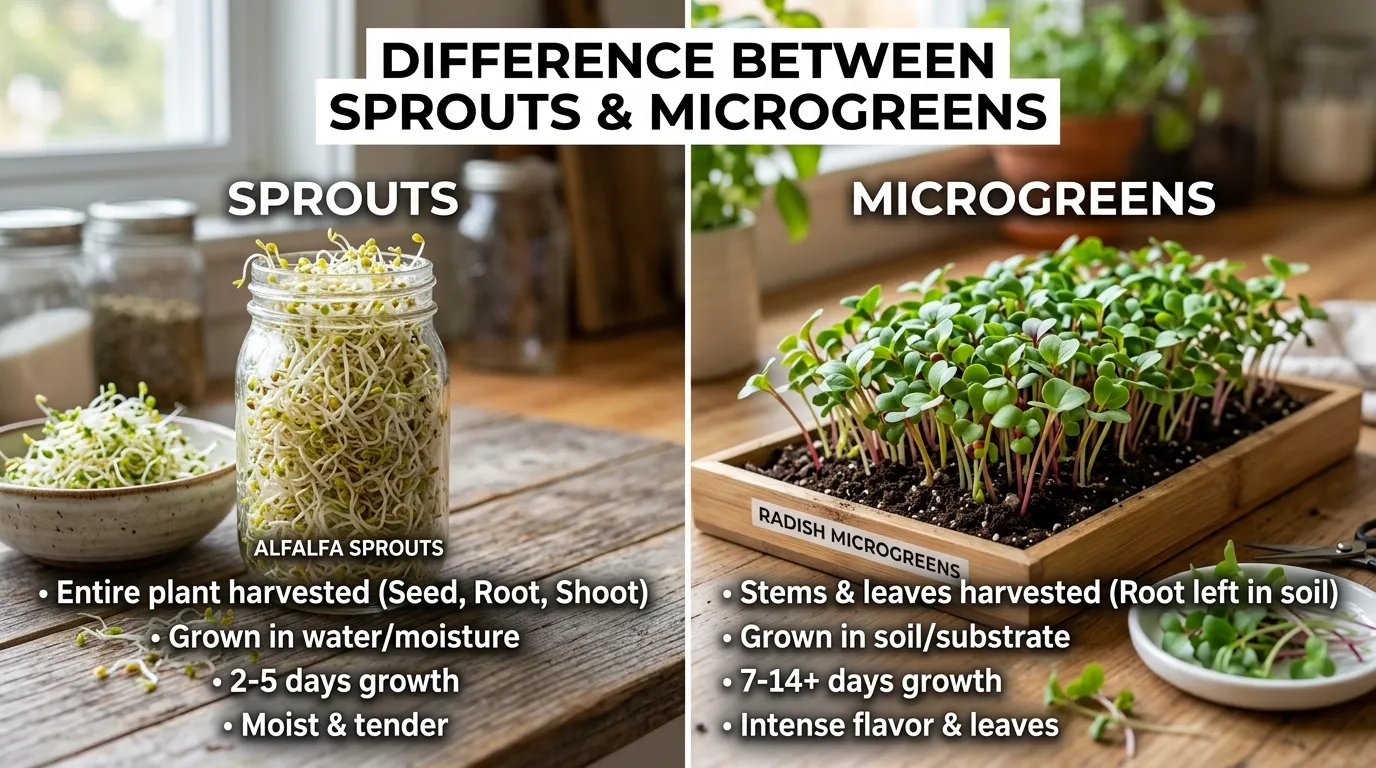
Many people search for the Difference Between Sprouts and Microgreens because both are considered healthy superfoods and often look similar at first glance. You may have seen them in salads, sandwiches, smoothies, or healthy meal videos on platforms like YouTube and Instagram. However, sprouts and microgreens are not the same thing.
The main Difference Between Sprouts and Microgreens is their growing stage, cultivation method, flavor, and nutritional profile. Sprouts are germinated seeds grown mainly in water and eaten whole, while microgreens are young vegetable greens grown in soil or growing mats and harvested after small leaves develop.
In this complete guide, you will learn:
- what sprouts and microgreens actually are
- how they grow
- which one is healthier
- their nutritional differences
- taste and texture comparison
- food safety concerns
If you are confused about sprouts vs microgreens, this article will make everything simple and clear.
Quick Answer: Difference Between Sprouts and Microgreens
Sprouts are freshly germinated seeds that grow in water for a few days and are eaten entirely, including the root, shoot, and seed. Microgreens are slightly older young greens grown in soil or another medium and harvested after their first leaves appear.
Simple Example
- Bean sprouts in stir-fry dishes = sprouts
- Sunflower greens in gourmet salads = microgreens
In simple words:
- Sprouts = water-grown baby shoots
- Microgreens = soil-grown young greens
Definition of Sprouts and Microgreens
Sprouts Definition
Sprouts are seeds that have just started germinating. They are usually grown in water without soil and harvested within 2 to 7 days. The entire plant is eaten, including the tiny roots, stem, and seed coating.
Common examples include:
- alfalfa sprouts
- mung bean sprouts
- broccoli sprouts
- lentil sprouts
Sprouts are popular because they grow quickly, require very little space, and are easy for beginners to grow at home.
Microgreens Definition
Microgreens are young vegetable or herb greens harvested at an early stage after the first true leaves appear. Unlike sprouts, microgreens are grown in soil, coco coir, or hydroponic mats and usually need sunlight or LED grow lights.
Common examples include:
- radish microgreens
- sunflower microgreens
- pea shoots
- basil microgreens
- kale microgreens
Microgreens are widely used in restaurants, health-focused meal plans, and premium food presentations because of their vibrant color, rich flavor, and concentrated nutrients.
Pronunciation of Both Terms
Sprouts
- US Pronunciation: /spraʊts/
- UK Pronunciation: /spraʊts/
Microgreens
- US Pronunciation: /ˈmaɪ.kroʊ.ɡriːnz/
- UK Pronunciation: /ˈmaɪ.krəʊ.ɡriːnz/
Now let’s understand the real-world Difference Between Sprouts and Microgreens in detail because this is where many beginners get confused.
Difference Between Sprouts and Microgreens Comparison Table
| Feature | Sprouts | Microgreens |
|---|---|---|
| Growing Method | Grown mainly in water jars or containers | Grown in soil, coco coir, or hydroponic trays |
| Harvest Time | Usually 2–7 days | Usually 7–21 days |
| Light Requirement | No sunlight normally needed | Requires sunlight or grow lights |
| Parts Eaten | Entire seed, root, and shoot | Stem and leaves only |
| Taste | Mild, crunchy, watery | Richer, stronger, more flavorful |
| Texture | Juicy and crisp | Tender and leafy |
| Nutritional Density | Healthy and enzyme-rich | Often higher in vitamins and antioxidants |
| Food Safety | Higher bacterial contamination risk | Generally safer with better airflow |
| Appearance | Thin pale shoots | Bright green colorful leaves |
| Growing Difficulty | Easier for beginners | Requires slightly more care |
| Cost | Cheap and fast to produce | More premium and expensive |
| Shelf Life | Shorter shelf life | Slightly longer freshness |
| Popular Uses | Sandwiches, wraps, stir-fry dishes | Salads, smoothies, restaurant garnishes |
| Commercial Demand | Moderate market demand | High demand in health food industry |
This table clearly explains the Difference Between Sprouts and Microgreens for quick understanding.
Key Differences Explained Between Sprouts and Microgreens
1. Growing Process
One of the biggest differences is how they grow.
Sprouts grow entirely in water. Seeds are soaked and rinsed regularly until they germinate. They do not usually need sunlight.
Microgreens grow in soil or another growing medium. They need airflow, moisture, and light exposure to develop leaves.
In real-world indoor gardening, sprouts are often grown in kitchen jars, while microgreens are commonly grown in trays under LED lights.
2. Growth Stage
Sprouts are harvested earlier in the plant life cycle. They are essentially germinated seeds.
Microgreens are harvested later, after small leaves called cotyledons or true leaves develop.
This extra growth period changes:
- flavor
- texture
- nutrition
- appearance
3. Flavor Difference
Many users searching Google for “sprouts vs microgreens taste” are surprised by how different they actually taste.
Sprouts:
- mild
- fresh
- watery
- crunchy
Microgreens:
- stronger
- earthy
- spicy
- aromatic depending on the variety
For example:
- radish microgreens taste peppery
- basil microgreens taste slightly sweet and herbal
That is why chefs prefer microgreens for gourmet dishes.
4. Nutrition Comparison
Both are nutritious, but microgreens are often considered more nutrient-dense.
Studies discussed across health communities and nutrition content suggest some microgreens may contain higher concentrations of:
- Vitamin C
- Vitamin K
- antioxidants
- polyphenols
Sprouts are still valuable because they provide:
- digestive enzymes
- hydration
- plant protein
- fiber
In practical use, many health-conscious people include both in their diet.
5. Food Safety and Bacteria Risk
Food safety is one of the most important topics in the Difference Between Sprouts and Microgreens discussion.
Sprouts grow in warm and humid conditions, which may increase the chance of bacteria such as:
- E. coli
- Salmonella
- Listeria
Microgreens generally have lower contamination risk because they grow with better airflow and are harvested above the soil line.
This is why many nutrition experts and wellness creators on Meta platforms discuss safe sprout handling regularly.
6. Appearance and Presentation
Sprouts usually look pale and root-heavy.
Microgreens look more vibrant and attractive because of their colorful leaves and stems.
Restaurants and food photographers often use microgreens for:
- plate decoration
- healthy meal presentation
- social media food content
7. Cost and Market Value
Sprouts are cheaper because they:
- grow faster
- require fewer materials
- need less maintenance
Microgreens are more expensive because they require:
- trays
- growing medium
- lighting
- monitoring
- harvesting care
In 2026, microgreen farming has become a growing urban business trend.
Why People Get Confused Between Sprouts and Microgreens
Similar Appearance
Both are tiny green plants, so beginners naturally assume they are identical.
Health Food Marketing
Many blogs and social media creators incorrectly use the terms interchangeably.
Grocery Store Labeling
Some supermarkets label microgreens and sprouts loosely, creating more confusion for buyers.
Social Media Influence
Short-form videos on TikTok often simplify gardening information too much, which spreads misinformation.
Which Is Healthier: Sprouts or Microgreens?
The answer depends on your goal.
Sprouts Are Better For:
- quick growing
- budget-friendly nutrition
- crunchy texture
- beginner home gardening
Microgreens Are Better For:
- stronger flavor
- nutrient concentration
- visual presentation
- gourmet recipes
Expert Insight
In practical nutrition planning, many diet-conscious users rotate both foods instead of choosing only one. This creates better flavor variety and nutrient diversity.
Real Life Uses of Sprouts and Microgreens
Home Kitchen Use
People commonly add sprouts to:
- sandwiches
- wraps
- noodles
- stir-fry dishes
Microgreens are frequently added to:
- salads
- smoothies
- avocado toast
- premium meal bowls
Restaurant Industry
Restaurants use microgreens to improve:
- plate presentation
- texture
- color contrast
- flavor complexity
Fitness and Wellness Culture
Fitness creators on YouTube often recommend broccoli sprouts and sunflower microgreens in healthy meal plans.
Urban Farming Business
Microgreen farming has become popular among small indoor farming businesses because restaurants and cafes buy them regularly.
Common Mistakes with Sprouts and Microgreens
1. Assuming Both Are the Same
This is the most common mistake.
Fix:
Understand that sprouts are germinated seeds while microgreens are leafy young plants.
2. Overwatering Microgreens
Too much water can create mold issues.
Fix:
Use proper airflow and controlled watering.
3. Growing Microgreens Without Light
Microgreens need light for healthy leaf growth.
Fix:
Place trays near windows or use LED grow lights.
4. Eating Poorly Cleaned Sprouts
Improperly handled sprouts may contain harmful bacteria.
Fix:
Use clean containers and quality seeds.
5. Harvesting Too Late
Old microgreens become tougher and less flavorful.
Fix:
Harvest when leaves are fresh and tender.
When Should You Use Sprouts or Microgreens?
Use Sprouts When:
- you need fast results
- you want low-cost nutrition
- you prefer crunchy texture
- you are new to indoor growing
Use Microgreens When:
- you want stronger flavors
- presentation matters
- you enjoy gourmet meals
- you want premium nutrition
FAQ About Difference Between Sprouts and Microgreens
Are sprouts and microgreens the same thing?
No. Sprouts are germinated seeds, while microgreens are young leafy greens harvested later.
Which is healthier: sprouts or microgreens?
Both are healthy, but microgreens may contain higher nutrient concentrations.
Can sprouts grow without soil?
Yes. Sprouts usually grow only in water.
Why are microgreens expensive?
They require more time, light, growing space, and maintenance.
Are sprouts safe to eat raw?
They can be safe if handled properly, but they carry a higher bacterial contamination risk.
Which grows faster?
Sprouts grow faster than microgreens.
Can I grow microgreens indoors?
Yes. Indoor growing with LED lights is very common.
Why do restaurants use microgreens?
Microgreens improve flavor, color, and food presentation.
Conclusion
Understanding the Difference Between Sprouts and Microgreens helps you make better choices for nutrition, gardening, cooking, and healthy living. While both are young plants packed with nutrients, they differ in growing method, harvest stage, flavor, safety, and overall use.
Sprouts are fast-growing germinated seeds usually grown in water and eaten whole. They are affordable, easy to grow, and ideal for beginners. Microgreens are slightly older young greens grown with light and harvested after leaves develop. They are richer in flavor, visually appealing, and widely used in premium health-focused meals.
Now you fully understand the complete Difference Between Sprouts and Microgreens and can confidently decide which one works best for your diet and daily routine.

Sarfraz Ahmad is language researcher and content writer who specializes in explaining the difference between commonly confused English words. Through WordClearify, learners understand subtle word distinctions in a simple, structured, and practical way. My writing focuses on clarity, real-life examples, and easy comparisons for students, bloggers, and professionals worldwide.