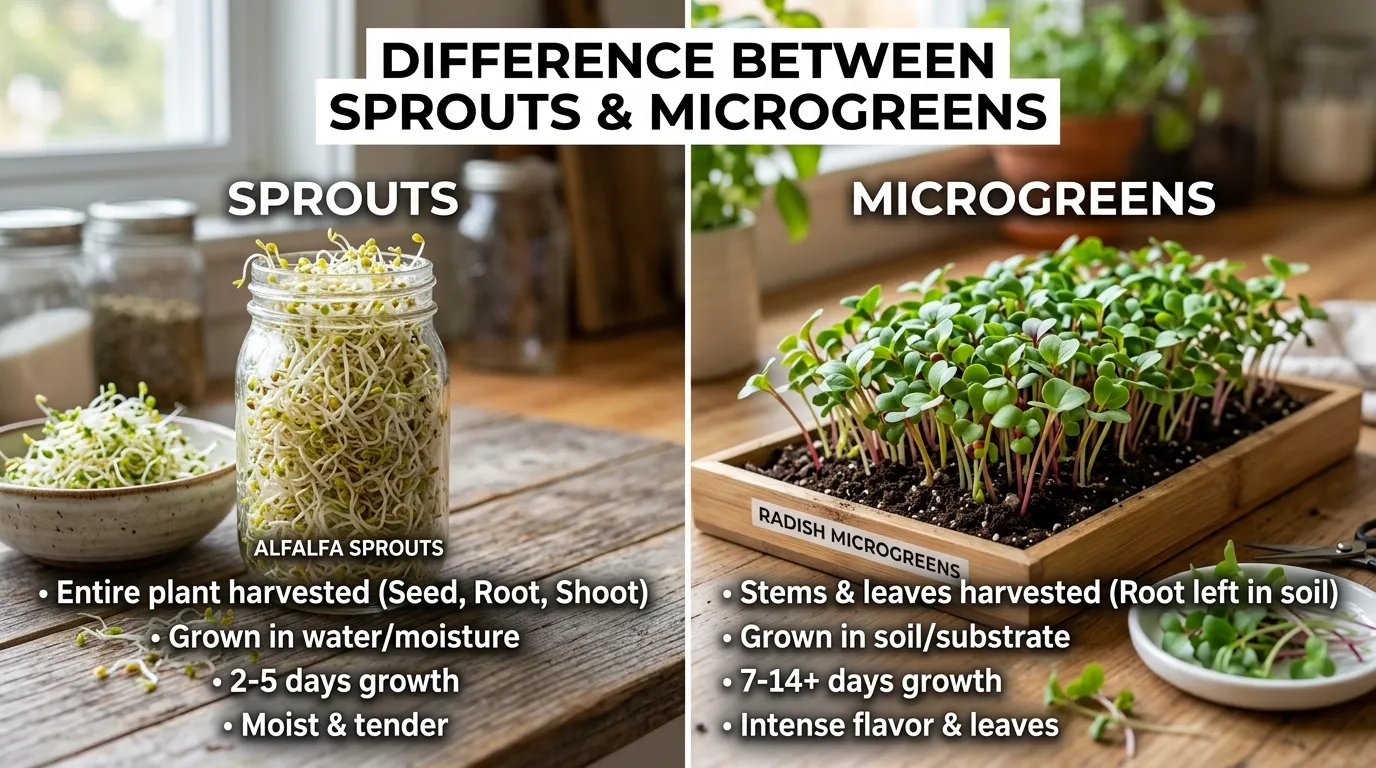
In a small kitchen garden, a mother shows her child two trays of green life. One tray holds tiny white shoots grown in a jar, while the other displays delicate green leaves standing tall in soil. “These are sprouts,” she says, pointing to the jar. “And these are microgreens.” At first glance, they look similar. Both are young plants. Both are healthy.
Yet the difference between sprouts and microgreens becomes clear once you understand how they grow, how they taste, and how they are used. Many people searching for the difference between sprouts and microgreens are surprised to learn that they are harvested at different stages.
In daily cooking, nutrition planning, and farming, knowing the difference between sprouts vs microgreens helps people make better food choices. Let’s explore this topic in detail.
Key Difference Between Sprouts vs Microgreens
The main difference lies in their stage of growth and method of cultivation.
- Sprouts are germinated seeds eaten within a few days, including seed, root, and shoot.
- Microgreens are young vegetable greens harvested after the first true leaves appear and are cut above the soil line.
Sprouts grow in water without soil. Microgreens grow in soil or a growing medium with light exposure. This is the fundamental difference between sprouts and microgreens.
Why Is Their Difference Necessary to Know for Learners and Experts?
Understanding the difference between sprouts and microgreens is important for students of agriculture, nutritionists, chefs, and home gardeners. For learners, it builds basic knowledge of plant life cycles. For experts, it supports decisions about food safety, market value, and crop production.
In society, both foods are symbols of healthy living. Restaurants use microgreens for presentation. Health-conscious families consume sprouts for protein and enzymes. Farmers and entrepreneurs also earn income by selling them. Knowing their difference ensures proper hygiene, correct farming practices, and informed consumer choices.
Pronunciation of the Both (US & UK)
- Sprouts
- US: /spraʊts/
- UK: /spraʊts/
- Microgreens
- US: /ˈmaɪ.kroʊ.ɡriːnz/
- UK: /ˈmaɪ.krəʊ.ɡriːnz/
Now that we know how to say these words correctly, let us move deeper into the main comparison.
Difference Between Sprouts and Microgreens
1. Stage of Growth
Sprouts are harvested after germination (2–7 days).
Example 1: Mung bean sprouts grown in a jar for 3 days.
Example 2: Lentil sprouts used in salads.
Microgreens are harvested after the first leaves appear (7–21 days).
Example 1: Sunflower microgreens cut after 10 days.
Example 2: Radish microgreens harvested after 14 days.
2. Growing Medium
Sprouts grow in water without soil.
Example 1: Alfalfa seeds soaked in a glass jar.
Example 2: Chickpeas rinsed daily until sprouted.
Microgreens grow in soil or coco peat.
Example 1: Mustard seeds planted in trays.
Example 2: Wheatgrass grown in compost.
3. Parts Eaten
Sprouts are eaten whole (seed, root, shoot).
Example 1: Entire bean sprout added to noodles.
Example 2: Full lentil sprout mixed in chaat.
Microgreens are cut above the root.
Example 1: Basil microgreens clipped for pizza topping.
Example 2: Pea shoots cut for sandwiches.
4. Light Requirement
Sprouts grow in darkness.
Example 1: Jar kept inside cupboard.
Example 2: Covered container on kitchen shelf.
Microgreens need sunlight or grow lights.
Example 1: Tray placed near window.
Example 2: LED grow light used indoors.
5. Nutritional Content
Sprouts are rich in enzymes and protein.
Example 1: Mung sprouts for protein diet.
Example 2: Sprouted beans for digestion.
Microgreens are high in vitamins and antioxidants.
Example 1: Red cabbage microgreens rich in vitamin C.
Example 2: Broccoli microgreens high in antioxidants.
6. Texture
Sprouts are soft and crunchy.
Example 1: Crisp bean sprouts in stir-fry.
Example 2: Soft alfalfa sprouts in sandwich.
Microgreens are tender with leafy texture.
Example 1: Delicate cilantro microgreens.
Example 2: Peppery radish leaves.
7. Taste
Sprouts taste mild and nutty.
Example 1: Lentil sprouts with neutral flavor.
Example 2: Soybean sprouts slightly sweet.
Microgreens taste stronger and sometimes spicy.
Example 1: Mustard microgreens spicy.
Example 2: Arugula microgreens peppery.
8. Harvesting Method
Sprouts are rinsed and drained.
Example 1: Draining jar upside down.
Example 2: Rinsing seeds twice daily.
Microgreens are cut with scissors.
Example 1: Snipping pea shoots.
Example 2: Cutting sunflower greens.
9. Market Value
Sprouts are cheaper and easy to grow.
Example 1: Homemade sprouts in kitchen.
Example 2: Low-cost street salads.
Microgreens are more expensive.
Example 1: Gourmet restaurant garnish.
Example 2: Organic farm produce.
10. Food Safety
Sprouts have higher risk of bacterial growth due to moisture.
Example 1: Risk of contamination in warm water.
Example 2: Need for careful rinsing.
Microgreens are generally safer when grown properly.
Example 1: Soil-based controlled farming.
Example 2: Clean harvesting method.
Nature and Behaviour of the Both Separately
Sprouts are fast-growing, water-dependent, and fragile. They thrive in moist conditions and grow rapidly.
Microgreens are light-loving, slightly stronger, and visually appealing. They develop small leaves and show early plant behavior.
Why People Are Confused About Their Use (Sprouts vs Microgreens) ?
Both look like tiny green plants. Both are used in salads and healthy dishes. Their small size and fresh appearance make them seem identical. However, they differ in growth stage and cultivation.
| Feature | Sprouts | Microgreens | Similarity |
| Growth Stage | Germinated seeds | Young seedlings | Both young plants |
| Growing Medium | Water | Soil/growing medium | Require moisture |
| Harvest Time | 2–7 days | 7–21 days | Quick crops |
| Taste | Mild | Stronger | Fresh flavor |
| Use | Salads, stir-fry | Garnish, gourmet dishes | Healthy food |
Which Is Better in What Situation?
Sprouts are better when someone needs quick protein-rich food at home. They grow easily in jars without sunlight. For busy families, sprouts are convenient and economical.
Microgreens are better for chefs, restaurants, and decorative dishes. They add color, flavor, and visual beauty. Farmers also prefer microgreens for commercial sales because they have higher market value.
Use in Metaphors and Similes
Sprouts often symbolize new beginnings.
Example: “His career is just a sprout waiting to grow.”
Microgreens can symbolize freshness and youth.
Example: “Her ideas are like microgreens — small but powerful.”
Connotative Meaning of Sprouts and Microgreens
Sprouts
- Positive: Growth, health, freshness
- “The project is sprouting with success.”
- Neutral: Early stage
- Negative: Weak start
- “His plan is still a small sprout.”
Microgreens
- Positive: Premium, modern, healthy
- “The café offers microgreen-style innovation.”
- Neutral: Small plants
Idioms or Proverbs Related to Sprouts and Microgreens
Though no direct idioms exist, related sayings include:
- “From small sprouts grow mighty trees.”
Example: Every big company starts small. - “Nip it in the bud.”
Example: Stop the problem early like cutting microgreens.
Works in Literature
- The Secret Garden (Children’s Fiction, Frances Hodgson Burnett, 1911) – themes of plant growth.
- The Botany of Desire (Non-fiction, Michael Pollan, 2001) – discusses plant cultivation.
Movie Names Made on Sprouts and Microgreens
While no major films are directly titled on these words, plant growth themes appear in:
- The Martian (2015, USA) – survival gardening theme.
- Secret Garden adaptations (Various years, UK/USA).
Frequently Asked Questions
1. Are sprouts healthier than microgreens?
Both are healthy but offer different nutrients.
2. Which grows faster?
Sprouts grow faster (2–7 days).
3. Do microgreens need sunlight?
Yes, they require light.
4. Are sprouts safe to eat raw?
Yes, but they must be washed properly.
5. Can I grow both at home?
Yes, both are easy to grow indoors.
How Both Are Useful for Surroundings
Sprouts promote sustainable eating because they require minimal resources. Microgreens support urban farming and reduce transportation pollution. Both contribute to green lifestyles and small-space gardening.
Final Words for the Both
Sprouts represent speed and simplicity. Microgreens represent flavor and value. Both are gifts of early plant life and symbols of health.
Conclusion
The difference between sprouts and microgreens lies mainly in their growth stage, cultivation method, and nutritional focus. While sprouts are germinated seeds eaten whole within days, microgreens are slightly older seedlings grown in soil and harvested for their leaves. Understanding this difference helps home gardeners, chefs, nutritionists, and learners make informed decisions. Both are healthy, easy to grow, and valuable in modern diets. Whether you prefer quick jar-grown sprouts or colorful soil-grown microgreens, both add freshness and nutrition to everyday meals.

Sarfraz Ahmad is language researcher and content writer who specializes in explaining the difference between commonly confused English words. Through WordClearify, learners understand subtle word distinctions in a simple, structured, and practical way. My writing focuses on clarity, real-life examples, and easy comparisons for students, bloggers, and professionals worldwide.