Imagine a young professional feeling stuck in their career. They visit a coach who helps them set goals and move forward with confidence. At the same time, another person dealing with emotional trauma seeks a counselor to heal from past experiences. This real-life contrast clearly highlights the difference between coaching and counseling. While both aim to help individuals improve their lives, their methods, goals, and focus are quite different.
Understanding the difference between coaching and counseling is essential for both learners and professionals. Many people confuse these terms, often using them interchangeably. However, knowing the difference between both can help individuals choose the right support system for their needs. Whether it’s personal growth or emotional healing, the right approach matters.
In today’s fast-paced world, awareness about coaching vs counseling is growing rapidly. People are becoming more conscious about mental health and self-development, making it crucial to understand when to seek coaching and when counseling is more appropriate.
Key Difference Between Coaching and Counseling
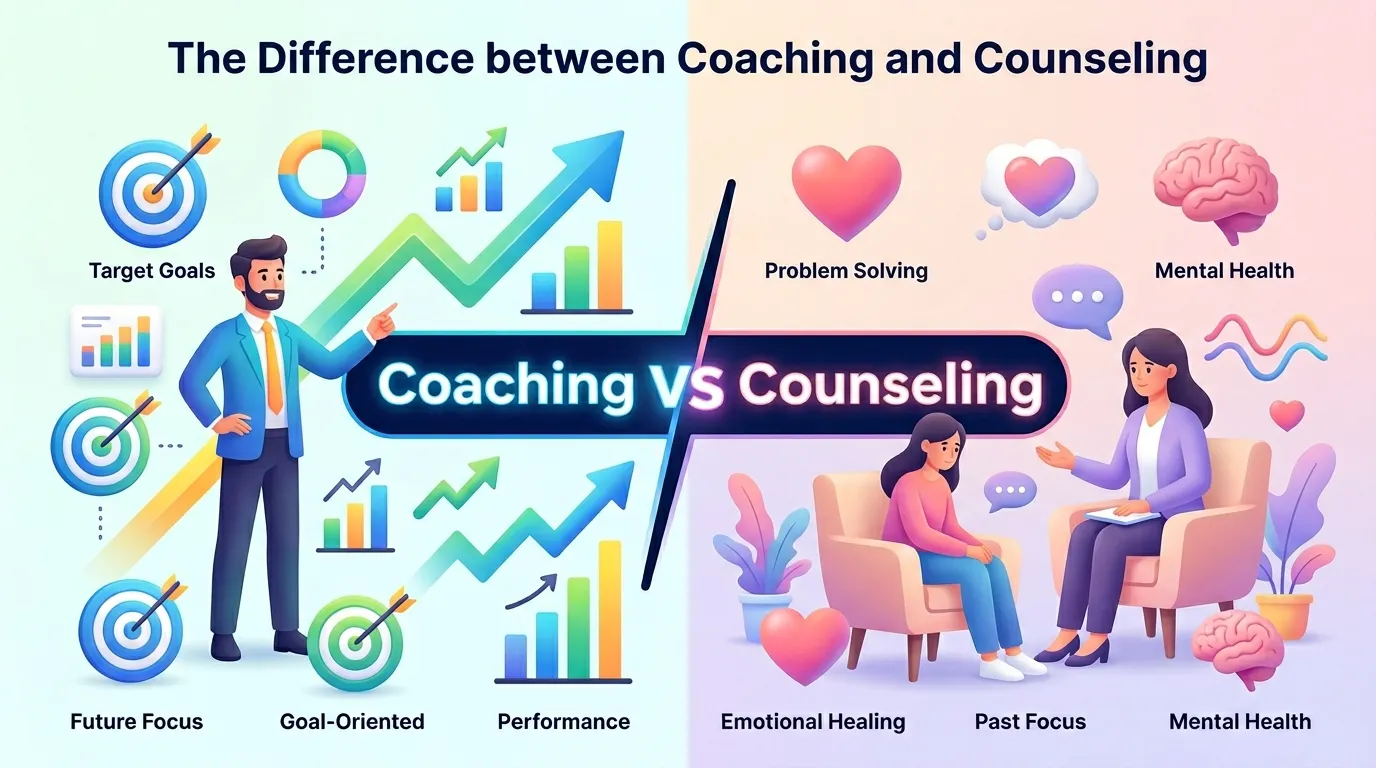
The core difference between coaching and counseling lies in their purpose:
- Coaching focuses on future goals, performance, and personal development.
- Counseling focuses on emotional healing, past experiences, and mental well-being.
Why Is Their Difference Necessary to Know?
Understanding the difference between coaching and counseling is important for both learners and experts because it directly impacts decision-making. Choosing the wrong approach can delay progress or worsen a situation.
For learners, this knowledge helps in selecting the right guidance for career growth or emotional challenges. For professionals, especially in education, healthcare, and corporate sectors, it ensures ethical and effective support for others.
In society, both coaching and counseling play vital roles. Coaching drives productivity, leadership, and success, while counseling supports mental health and emotional balance. Knowing their differences strengthens communities by promoting the right kind of help at the right time.
Pronunciation of Both (US & UK)
- Coaching
- US: /ˈkoʊ.tʃɪŋ/
- UK: /ˈkəʊ.tʃɪŋ/
- Counseling
- US: /ˈkaʊn.sə.lɪŋ/
- UK: /ˈkaʊn.səl.ɪŋ/
Now that you know how to pronounce them, let’s move deeper into understanding their real differences.
Difference Between the Coaching and Counseling
1. Purpose
- Coaching: Focuses on achieving goals
- Example 1: A coach helps an athlete improve performance
- Example 2: A business coach helps increase productivity
- Counseling: Focuses on healing emotional issues
- Example 1: A counselor helps with anxiety
- Example 2: Therapy for grief recovery
2. Time Orientation
- Coaching: Future-focused
- Example 1: Planning career growth
- Example 2: Setting business targets
- Counseling: Past-focused
- Example 1: Addressing childhood trauma
- Example 2: Understanding past relationships
3. Approach
- Coaching: Action-oriented
- Example 1: Creating strategies
- Example 2: Building habits
- Counseling: Reflective
- Example 1: Emotional discussions
- Example 2: Deep conversations
4. Duration
- Coaching: Short-term
- Example 1: 3-month coaching program
- Example 2: Weekly sessions for goals
- Counseling: Long-term
- Example 1: Therapy over years
- Example 2: Ongoing mental health support
5. Focus Area
- Coaching: Skills and performance
- Example 1: Leadership skills
- Example 2: Time management
- Counseling: Mental health
- Example 1: Depression
- Example 2: Trauma recovery
6. Qualification
- Coaching: Not always regulated
- Example 1: Life coach certification
- Example 2: Business mentor
- Counseling: Requires professional degree
- Example 1: Licensed therapist
- Example 2: Clinical psychologist
7. Role of Professional
- Coaching: Guide and motivator
- Example 1: Encourages growth
- Example 2: Tracks progress
- Counseling: Healer and listener
- Example 1: Provides emotional support
- Example 2: Diagnoses issues
8. Techniques Used
- Coaching: Goal-setting tools
- Example 1: SMART goals
- Example 2: Performance tracking
- Counseling: Psychological methods
- Example 1: Cognitive therapy
- Example 2: Behavioral therapy
9. Client Type
- Coaching: Mentally healthy individuals
- Example 1: Professionals
- Example 2: Students
- Counseling: Individuals facing emotional struggles
- Example 1: Trauma victims
- Example 2: People with anxiety
10. Outcome
- Coaching: Achievement and growth
- Example 1: Career success
- Example 2: Skill improvement
- Counseling: Emotional stability
- Example 1: Reduced stress
- Example 2: Better mental health
Nature and Behaviour of Both
Coaching is proactive, motivating, and structured. It focuses on pushing individuals toward success. Coaches act as partners in growth.
Counseling is empathetic, supportive, and healing-focused. Counselors provide a safe space for emotional expression and recovery.
Why People Are Confused About Their Use?
People often confuse coaching and counseling because both involve helping others. Additionally, the terms are widely used in similar contexts like personal development and self-improvement.
Differences and Similarities Table
| Aspect | Coaching | Counseling |
|---|---|---|
| Focus | Future goals | Past issues |
| Approach | Action-based | Emotional healing |
| Duration | Short-term | Long-term |
| Purpose | Growth | Recovery |
| Similarity | Both help individuals improve their lives |
Which Is Better in What Situation?
Coaching is better when someone wants to improve performance, set goals, or grow professionally. It works best for individuals who are mentally stable but need direction and motivation.
Counseling is better when someone is dealing with emotional pain, trauma, or mental health issues. It provides a safe environment for healing and understanding deep-rooted problems.
Use in Metaphors and Similes
- Coaching: “A coach is like a compass guiding you forward.”
- Counseling: “Counseling is like a mirror reflecting your inner self.”
Connotative Meaning
- Coaching: Positive (growth, success)
- Example: “She benefited from coaching to achieve her dreams.”
- Counseling: Neutral to positive (healing, support)
- Example: “Counseling helped him recover from stress.”
Idioms or Proverbs Related
- “Practice makes perfect” (related to coaching)
- Example: Coaching improves skills through practice
- “A problem shared is a problem halved” (related to counseling)
- Example: Counseling reduces emotional burden
Works in Literature
- Coaching
- The Inner Game of Tennis – Sports Psychology, W. Timothy Gallwey, 1974
- Counseling
- On Becoming a Person – Psychology, Carl Rogers, 1961
Movies Based on Themes
- Coaching
- Coach Carter (2005, USA)
- Counseling
- Good Will Hunting (1997, USA)
Frequently Asked Questions
1. What is the main difference between coaching and counseling?
Coaching focuses on future goals, while counseling focuses on emotional healing.
2. Can one person be both a coach and a counselor?
Yes, but they must have proper training and qualifications for both roles.
3. Is coaching part of therapy?
No, coaching is not therapy; it is performance-oriented.
4. When should I choose counseling?
When dealing with emotional or psychological issues.
5. Is coaching effective for students?
Yes, it helps in goal-setting and academic improvement.
How Both Are Useful for Surroundings
Coaching helps individuals grow professionally, improving productivity in workplaces and education systems. Counseling supports mental health, creating emotionally stable communities. Together, they contribute to a balanced and progressive society.
Final Words for Both
Both coaching and counseling are powerful tools. One builds your future, while the other heals your past. Understanding coaching vs counseling ensures you choose the right path for personal and professional growth.
Conclusion
The difference between coaching and counseling is clear when we understand their purpose, approach, and outcomes. Coaching is about moving forward and achieving goals, while counseling focuses on healing emotional wounds and understanding the past. Both are essential in today’s world, where personal growth and mental health are equally important. Knowing the coaching vs counseling distinction empowers individuals to make better decisions and seek the right help. Ultimately, whether you choose coaching or counseling depends on your needs, but both play a vital role in shaping a healthier and more successful life.

Sarfraz Ahmad is language researcher and content writer who specializes in explaining the difference between commonly confused English words. Through WordClearify, learners understand subtle word distinctions in a simple, structured, and practical way. My writing focuses on clarity, real-life examples, and easy comparisons for students, bloggers, and professionals worldwide.