Imagine a famous athlete who represents a sports brand for many years, appearing in advertisements, attending events, and promoting the brand’s values. At the same time, think about a social media personality who posts a photo using a product and encourages followers to try it. Both people promote brands, but their roles are not the same. The first person is usually a brand ambassador, while the second is commonly known as an influencer.
Understanding the brand ambassador vs influencer difference helps businesses choose the right marketing strategy and helps individuals understand how modern promotion works. In simple terms, an ambassador represents a brand or organization officially and often for a long period. An influencer, however, promotes products through social media and personal influence over followers.
The concept of Brand Ambassador vs Social Media Influencer: has become important in marketing, digital media, and business communication. Many companies rely on both roles to reach audiences effectively. Knowing the influencer vs ambassador difference can help marketers, students, and professionals make better decisions. In the growing world of digital marketing, understanding both is essential for success.
Key Difference Between Brand Ambassador and Influencer
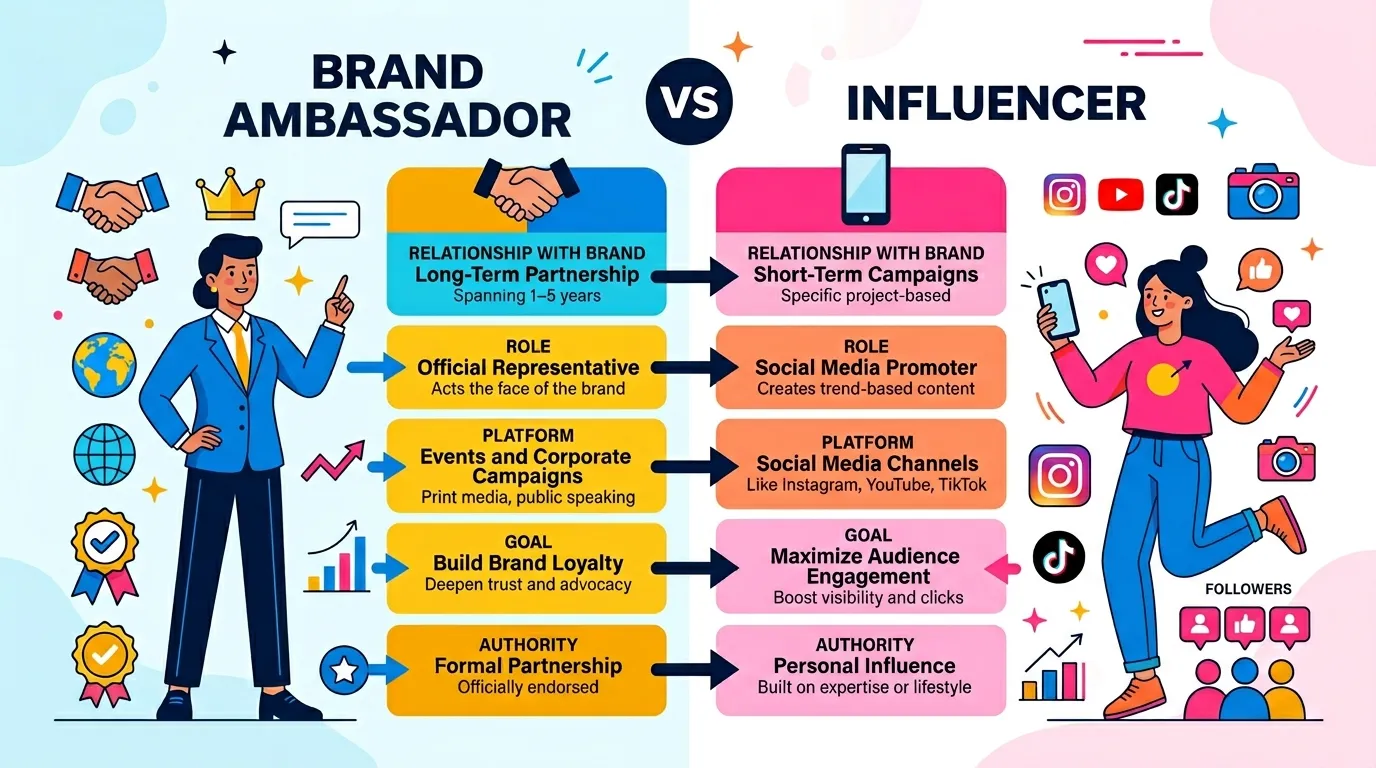
The main difference between both lies in their relationship with a brand and the duration of promotion.
An ambassador usually has a long-term partnership with a brand and represents its values consistently. An influencer, on the other hand, often works with brands on short-term campaigns, promoting products through social media posts, videos, or stories.
In short, brand ambassador vs influencer can be understood as long-term representation versus short-term promotion.
Why Is Their Difference Necessary to Know for Learners and Experts?
Understanding the difference between both is important for learners studying marketing, communication, and media studies. It helps them understand how brands build trust and reach audiences in different ways.
For experts and professionals, especially marketers and business owners, the concept of ambassador vs influencer is crucial when designing advertising strategies. Brand ambassadors help create long-term credibility and brand identity, while influencers help generate quick visibility and engagement on social media platforms.
In society, both roles shape public opinions, trends, and consumer behavior. By understanding the difference between ambassador and influencer, businesses can invest their marketing budgets wisely and audiences can better understand the nature of promotions they see online.
Pronunciation of Both Words (US & UK)
- Ambassador
- US Pronunciation: /æmˈbæs.ə.dɚ/
- UK Pronunciation: /æmˈbæs.ə.də/
- Influencer
- US Pronunciation: /ˈɪn.fluː.ən.sɚ/
- UK Pronunciation: /ˈɪn.fluː.ən.sə/
Difference between Brand Ambassador and Influencer
1. Definition
An ambassador officially represents a brand, organization, or country. An influencer promotes products through personal influence, usually on social media.
Examples (Ambassador):
- A celebrity signing a long-term contract with a clothing brand.
- A diplomat representing their country abroad.
Examples (Influencer):
- A YouTuber recommending a skincare product.
- An Instagram creator posting sponsored content.
2. Duration of Partnership
Ambassadors usually work with brands for long periods, while influencers often collaborate for short campaigns.
Examples (Ambassador):
- A sports player representing a shoe brand for years.
- A university appointing a student ambassador for the academic year.
Examples (Influencer):
- A fashion influencer promoting a product for one week.
- A TikTok creator doing a one-time sponsored post.
3. Relationship with the Brand
Ambassadors have a deeper and official connection with the brand. Influencers have more flexible partnerships.
Examples (Ambassador):
- A technology company’s official brand ambassador.
- A charity organization’s goodwill ambassador.
Examples (Influencer):
- A blogger reviewing a smartphone brand.
- A travel influencer promoting a hotel.
4. Role and Responsibility
Ambassadors represent the brand’s values and identity. Influencers mainly focus on promotion and audience engagement.
Examples (Ambassador):
- Attending brand events and campaigns.
- Promoting brand values in interviews.
Examples (Influencer):
- Posting product reviews online.
- Creating sponsored videos.
5. Platform of Influence
Ambassadors often appear in traditional and digital media. Influencers mainly operate on social media platforms.
Examples (Ambassador):
- Appearing in television advertisements.
- Representing brands at conferences.
Examples (Influencer):
- Instagram product promotions.
- YouTube review videos.
6. Level of Authority
Ambassadors often have official authority to represent a brand. Influencers rely on personal popularity.
Examples (Ambassador):
- A celebrity chosen as a brand face.
- A student representing a university program.
Examples (Influencer):
- A lifestyle blogger recommending products.
- A gamer promoting gaming accessories.
7. Marketing Goal
Ambassadors focus on brand image and loyalty. Influencers focus on reach and engagement.
Examples (Ambassador):
- Building trust in a luxury brand.
- Representing brand values globally.
Examples (Influencer):
- Increasing product awareness.
- Driving quick online sales.
8. Professional Status
Ambassadors are often formally appointed. Influencers may collaborate informally.
Examples (Ambassador):
- A government appointing a cultural ambassador.
- A company signing an official contract.
Examples (Influencer):
- A micro-influencer promoting products.
- A blogger collaborating with brands.
9. Audience Connection
Ambassadors represent brands broadly. Influencers connect closely with niche audiences.
Examples (Ambassador):
- A global celebrity representing a brand worldwide.
- A sports icon promoting fitness brands.
Examples (Influencer):
- A beauty influencer with skincare followers.
- A travel influencer sharing destination tips.
10. Trust and Authenticity
Ambassadors represent consistent brand identity, while influencers build trust through personal opinions.
Examples (Ambassador):
- A long-term partnership with a brand.
- Promoting a product in multiple campaigns.
Examples (Influencer):
- Honest product reviews.
- Sharing personal experiences with products.
Nature and Behaviour of Both
The nature of an ambassador is official, responsible, and long-term oriented. Ambassadors behave as representatives who maintain a brand’s reputation and values.
The nature of an influencer is personal, creative, and audience-focused. Influencers interact closely with followers and influence opinions through content such as posts, videos, and stories.
Why People Are Confused About Their Use? (Brand Ambassador vs Influencer)
People often confuse brand ambassador vs influencer because both promote products or brands. However, their roles, responsibilities, and partnerships are different.
| Aspect | Ambassador | Influencer | Similarity |
| Role | Official representative | Social media promoter | Both promote brands |
| Duration | Long-term | Short-term | Both influence audiences |
| Platform | Media, events, campaigns | Social media | Both support marketing |
| Relationship | Formal partnership | Flexible collaboration | Both build brand awareness |
Which Is Better in What Situation?
Ambassador
An ambassador is better when a company wants long-term brand identity and credibility. Ambassadors represent values and create trust among audiences. Large companies often appoint ambassadors to strengthen brand reputation and maintain consistent messaging across campaigns.
Influencer
An influencer is better when a company wants quick visibility and engagement. Influencers can promote products to targeted audiences through social media. They are especially useful for product launches, online campaigns, and reaching younger audiences quickly.
How the both Are Used in Metaphors and Similes
Sometimes these words are used figuratively.
Examples:
- “She became an ambassador of kindness in her community.”
- “His smile was an influencer, spreading positivity everywhere.”
- “Teachers are ambassadors of knowledge.”
- “Social media stars act like influencers of modern culture.”
Connotative Meaning
Ambassador
- Usually positive
- Suggests leadership, representation, and trust.
Examples:
- She became an ambassador for environmental awareness.
- He acts as an ambassador of peace in his community.
Influencer
- Mostly neutral or positive, but sometimes negative when used for manipulation.
Examples:
- The influencer inspired thousands of people to adopt healthy habits.
- Some influencers promote products without proper research.
Idioms or Proverbs Related to the Words
Direct idioms are rare, but related expressions exist.
“Actions speak louder than words.”
Example: A brand ambassador proves the brand’s quality through actions.
“Lead by example.”
Example: Influencers should lead by example when promoting products.
Works in Literature
Ambassador
- The Ambassadors — Novel, Henry James, 1903
Influencer
- Influencer: The Power to Change Anything — Nonfiction, Joseph Grenny and Kerry Patterson, 2007
Movie Names Made on Both
Ambassador
- The Ambassador — 2011, Denmark
- The Ambassador — 1984, United States
Influencer
- Influencer — 2022, United States
Frequently Asked Questions (FAQs)
1. What is the main difference between brand ambassador and influencer?
An ambassador represents a brand long-term, while an influencer promotes products mainly through social media campaigns.
2. Can an influencer become a brand ambassador?
Yes, many influencers become ambassadors after building trust with a brand and audience.
3. Do ambassadors always work for companies?
No, ambassadors can represent governments, charities, universities, or organizations.
4. Are influencers always celebrities?
No, influencers can be ordinary people with strong social media followings.
5. Why do companies use both ambassadors and influencers?
Companies use ambassadors for brand trust and influencers for quick promotion and engagement.
How Both Are Useful for Surroundings
Ambassadors and influencers both shape opinions and trends in society. Ambassadors promote values such as education, health, and social responsibility. Influencers help spread information quickly through digital platforms. Together, they help organizations communicate messages effectively and reach diverse audiences.
Final Words for Both
Ambassadors and influencers play significant roles in modern communication and marketing. While ambassadors represent brands with long-term commitment, influencers connect with audiences through social media and personal storytelling.
Conclusion
In conclusion, understanding the difference between ambassador and influencer is important in the modern digital world. The concept of ambassador vs influencer highlights two distinct approaches to promotion and representation. Ambassadors focus on long-term relationships, brand identity, and trust, while influencers focus on short-term campaigns and audience engagement. Both roles contribute to marketing success and public communication in different ways. By recognizing the difference between both, businesses, students, and professionals can better understand marketing strategies and the impact of social media in shaping consumer behavior.

Sarfraz Ahmad is language researcher and content writer who specializes in explaining the difference between commonly confused English words. Through WordClearify, learners understand subtle word distinctions in a simple, structured, and practical way. My writing focuses on clarity, real-life examples, and easy comparisons for students, bloggers, and professionals worldwide.