Imagine Ahmed, a young professional in a busy city, suddenly needing medical care after a minor accident. When he visits the hospital, he’s asked whether he has a POS plan or an HMO plan. Confused, he realizes he never truly understood the difference between POS and HMO. This situation is more common than you think. Many people hear terms like POS vs HMO during insurance enrollment but don’t fully grasp their meaning.
A POS (Point of Service) plan and an HMO (Health Maintenance Organization) plan are two common types of health insurance models. While both aim to provide affordable healthcare, they differ in flexibility, cost, and provider access.
Understanding the POS vs HMO comparison can help individuals make smarter healthcare decisions. In fact, knowing the difference between both is essential for choosing the right plan for your needs. This article explores POS vs HMO in depth so you can confidently navigate your options.
Key Difference Between POS and HMO
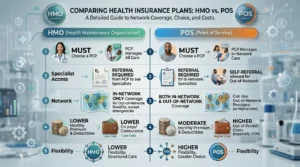
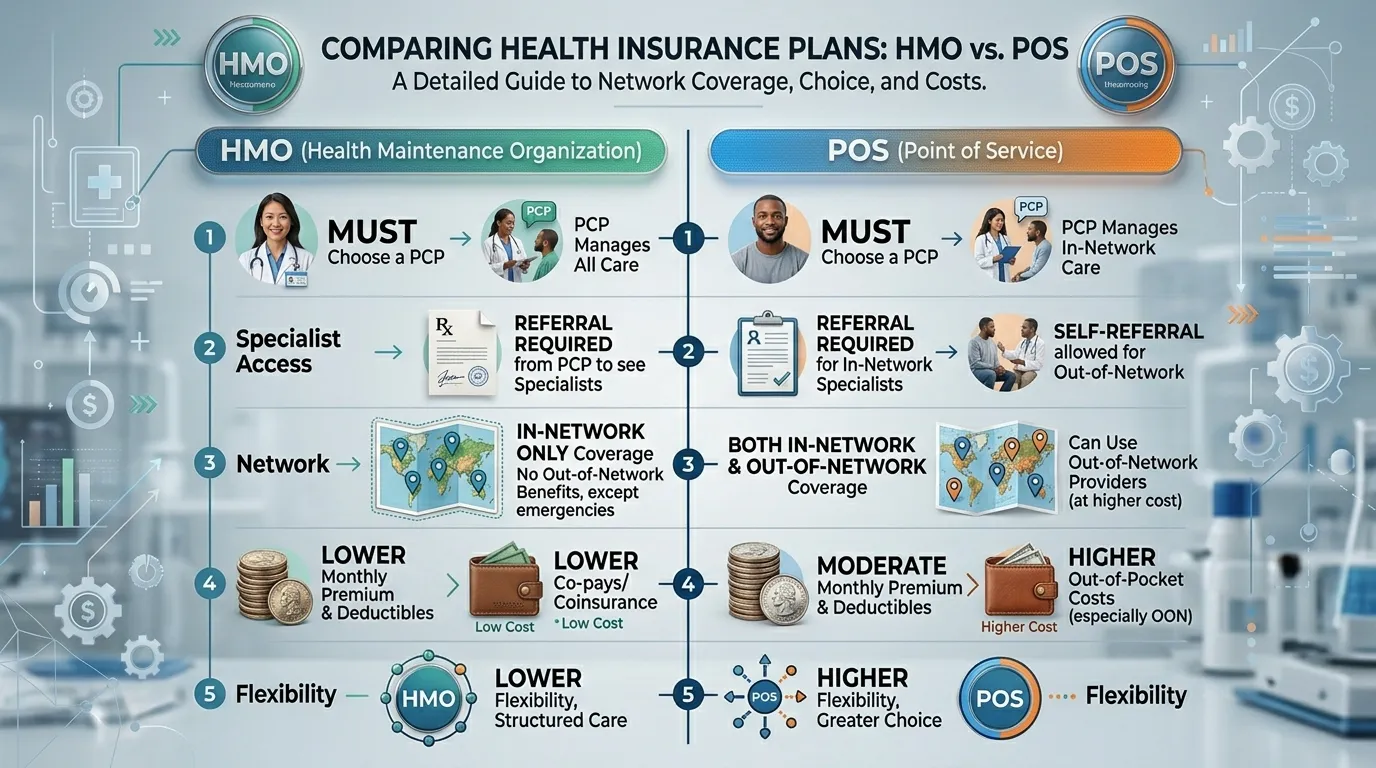
The main difference between POS and HMO lies in flexibility and provider choice.
- HMO plans require you to stay within a network and choose a primary care physician (PCP).
- POS plans offer more flexibility by allowing out-of-network visits, though at a higher cost.
In simple terms, POS vs HMO is about choosing between strict cost control (HMO) and flexibility (POS).
Why Is It Important to Know the Difference?
Understanding the difference between POS and HMO is crucial for both learners and professionals in healthcare, insurance, and finance. For individuals, it ensures better financial planning and access to appropriate medical care. For experts, it helps in advising patients and clients effectively.
In society, healthcare decisions directly impact well-being and financial stability. Knowing POS vs HMO helps people avoid unexpected medical bills and choose plans aligned with their lifestyle. It also improves awareness of how healthcare systems function, making individuals more responsible and informed citizens.
Pronunciation of Both (US & UK)
- POS (Point of Service)
- US: /ˌpiː oʊ ˈɛs/
- UK: /ˌpiː əʊ ˈɛs/
- HMO (Health Maintenance Organization)
- US: /ˌeɪtʃ ɛm ˈoʊ/
- UK: /ˌeɪtʃ ɛm əʊ/
Now that you can pronounce them correctly, let’s dive deeper into their differences and real-world applications.
POS vs HMO Comparison in Details
1. Network Flexibility
- POS: Allows out-of-network visits
- Example 1: Visiting a specialist outside network
- Example 2: Traveling and seeing a different doctor
- HMO: Strictly in-network
- Example 1: Must choose listed doctors
- Example 2: No coverage outside network
2. Primary Care Physician (PCP)
- POS: Requires PCP but flexible referrals
- Example 1: PCP suggests specialist
- Example 2: You can go without referral (higher cost)
- HMO: PCP mandatory
- Example 1: Referral needed always
- Example 2: No direct specialist access
3. Cost Structure
- POS: Moderate premiums and costs
- Example 1: Higher cost for flexibility
- Example 2: Mixed payment structure
- HMO: Lower premiums
- Example 1: Affordable monthly payments
- Example 2: Lower out-of-pocket
4. Referrals
- POS: Optional referrals
- Example 1: Direct specialist visit
- Example 2: Referral reduces cost
- HMO: Required referrals
- Example 1: Must consult PCP first
- Example 2: No referral = no coverage
5. Paperwork
- POS: More paperwork
- Example 1: Claims for out-of-network
- Example 2: Reimbursement process
- HMO: Minimal paperwork
- Example 1: Direct billing
- Example 2: Simple system
6. Coverage Area
- POS: Wider coverage
- Example 1: Travel coverage
- Example 2: Access to more doctors
- HMO: Limited area
- Example 1: Local coverage only
- Example 2: Restricted regions
7. Cost Control
- POS: Balanced cost
- Example 1: Pay more for flexibility
- Example 2: Moderate savings
- HMO: Strict cost control
- Example 1: Lower expenses
- Example 2: Predictable billing
8. Specialist Access
- POS: Easier access
- Example 1: Self-referral option
- Example 2: Faster appointments
- HMO: Restricted access
- Example 1: PCP approval required
- Example 2: Limited specialists
9. Freedom of Choice
- POS: High freedom
- Example 1: Choose providers
- Example 2: Customize care
- HMO: Limited freedom
- Example 1: Fixed network
- Example 2: Less flexibility
10. Best For
- POS: People needing flexibility
- Example 1: Frequent travelers
- Example 2: Specialist care users
- HMO: Budget-conscious users
- Example 1: Families
- Example 2: Routine care seekers
Nature and Behaviour of Both
- POS Plans are flexible, adaptive, and user-oriented. They balance cost and freedom, making them suitable for dynamic lifestyles.
- HMO Plans are structured, controlled, and cost-efficient. They focus on preventive care and affordability.
Why People Are Confused About Their Use?
People often confuse POS and HMO because both involve networks, primary care physicians, and managed care systems. Their similar terminology and overlapping features make it difficult to distinguish them clearly.
Comparison Table (POS vs HMO)
| Feature | POS | HMO | Similarity |
| Network | Flexible | Restricted | Both use networks |
| Cost | Moderate | Low | Cost-saving options |
| PCP | Required | Required | Central role |
| Referrals | Optional | Mandatory | Specialist access control |
| Flexibility | High | Low | Managed care system |
Which Is Better in What Situation?
A POS plan is better for individuals who need flexibility, such as frequent travelers or those requiring specialized medical care. It allows more freedom in choosing healthcare providers, even outside the network, though it may cost more.
An HMO plan is ideal for people who prefer affordability and structured care. It works well for families or individuals who primarily need routine checkups and want to keep healthcare costs low.
Use in Metaphors and Similes
- POS is like a “flexible road with multiple routes”
- HMO is like a “guided path with strict directions”
Example:
- “Choosing POS is like having open travel options.”
- “HMO is like following a fixed map.”
Connotative Meaning
- POS
- Positive: Flexible, adaptable
- Negative: Expensive
- Neutral: Balanced plan
- Example: “POS gives freedom but at a cost.”
- HMO
- Positive: Affordable, organized
- Negative: Restrictive
- Neutral: Structured system
- Example: “HMO ensures controlled healthcare expenses.”
Idioms or Proverbs Related
(Not directly related, but adapted usage)
- “Cut your coat according to your cloth” (HMO – budget control)
- “Keep your options open” (POS – flexibility)
Examples:
- “With HMO, you cut your coat according to your cloth.”
- “POS helps you keep your options open.”
Works in Literature
- Healthcare Systems Explained – Non-fiction, John Smith, 2015
- The Cost of Care – Essay, Maria Lee, 2018
- Modern Insurance Models – Academic, David Brown, 2020
Movies Related to Healthcare Themes
- Sicko (2007, USA)
- The Waiting Room (2012, USA)
- John Q (2002, USA)
FAQs
1. What is the main difference between POS and HMO?
POS offers flexibility, while HMO focuses on cost control.
2. Which is cheaper, POS or HMO?
HMO is generally cheaper.
3. Can I see a specialist without referral in POS?
Yes, but it may cost more.
4. Is HMO good for families?
Yes, due to lower costs and structured care.
5. Which plan is better overall?
It depends on your needs flexibility (POS) vs affordability (HMO).
How Both Are Useful for Surroundings
Both POS and HMO contribute to a healthier society by making healthcare accessible and structured. POS supports diverse medical needs, while HMO ensures affordable care for larger populations.
Final Words for Both
POS and HMO are essential health insurance models, each serving different needs. Understanding their strengths helps in making informed decisions and improving healthcare experiences.
Conclusion
In conclusion, the difference between POS and HMO lies in flexibility, cost, and control. While POS offers greater freedom and broader access, HMO provides affordability and structured care. Choosing between POS vs HMO depends on individual priorities, whether it’s flexibility or cost savings. By understanding these differences, individuals can make smarter healthcare decisions and avoid unnecessary financial stress. Ultimately, both plans play a vital role in modern healthcare systems.

Sarfraz Ahmad is language researcher and content writer who specializes in explaining the difference between commonly confused English words. Through WordClearify, learners understand subtle word distinctions in a simple, structured, and practical way. My writing focuses on clarity, real-life examples, and easy comparisons for students, bloggers, and professionals worldwide.