Imagine a hardworking employee who decides to leave their job after years of service. One colleague says they are resigning, while another claims they are quitting. At first, these words may seem identical, but in reality, there is a subtle yet important distinction. Understanding the difference between resigning and quitting can shape how others perceive your decision and professionalism.
In daily life, people often use these terms interchangeably, but the difference between resigning and quitting becomes significant in workplaces, professional communication, and even social settings. Whether you’re an employee planning your exit or a manager evaluating someone’s departure, knowing the difference between them helps maintain clarity and respect.
This article explores resigning vs quitting in depth, explaining their meanings, uses, and implications. By the end, you’ll clearly understand both and how to use each term appropriately.
Key Difference Between the Both
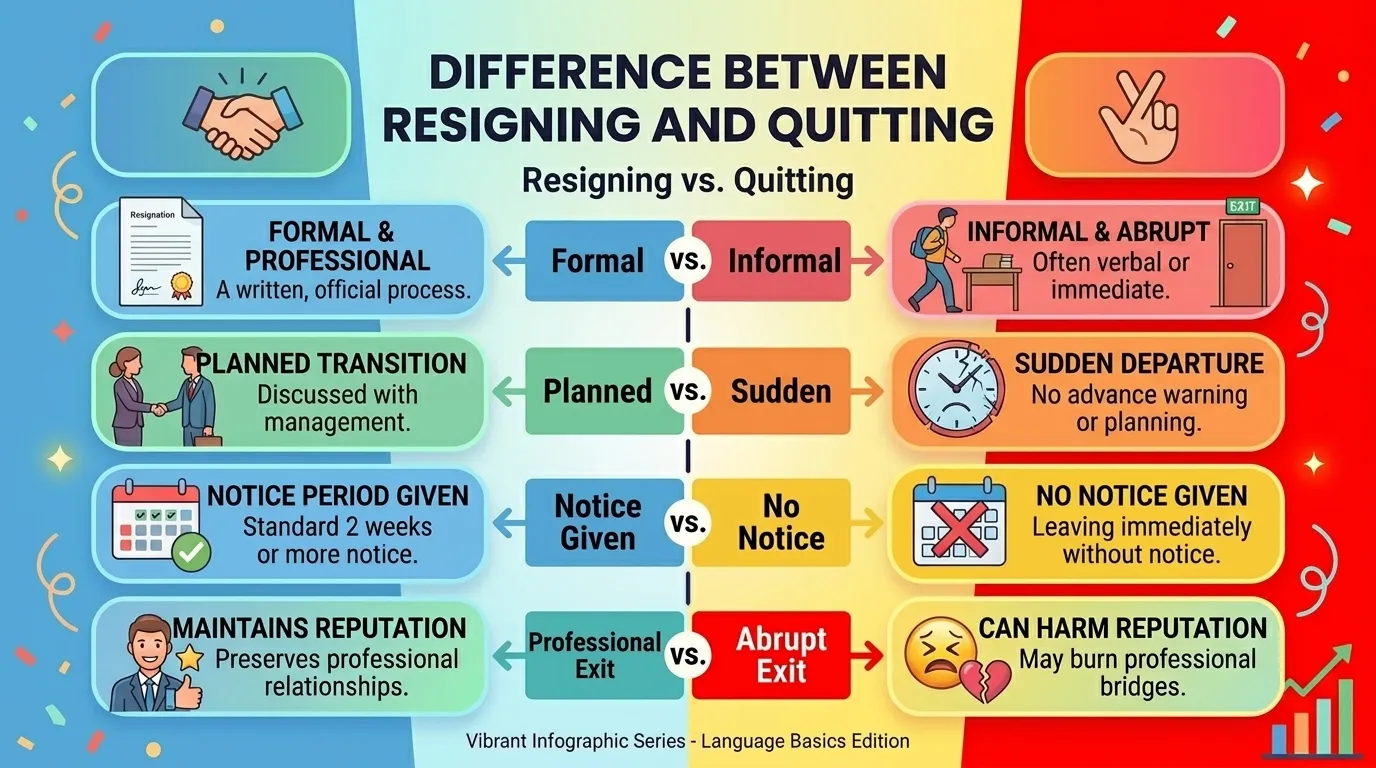
The core difference lies in tone, intention, and professionalism.
- Resigning is formal, planned, and respectful.
- Quitting is informal, often sudden, and sometimes emotionally driven.
Why Is Their Difference Important for Learners and Experts?
Understanding the difference is essential for both beginners and professionals. For learners, it helps build proper communication skills and workplace etiquette. Using the correct term can leave a positive impression during interviews or discussions.
For experts, especially managers and HR professionals, recognizing resigning vs quitting helps interpret employee behavior and intentions. It also reflects workplace culture. In society, these terms influence how a person’s departure is perceived—either as professional growth or abrupt withdrawal.
Pronunciation of Both (US & UK)
- Resigning
- US: /rɪˈzaɪ.nɪŋ/
- UK: /rɪˈzaɪ.nɪŋ/
- Quitting
- US: /ˈkwɪ.t̬ɪŋ/
- UK: /ˈkwɪ.tɪŋ/
Understanding pronunciation helps ensure clarity in both spoken and written communication. Now, let’s move deeper into the detailed comparison.
Difference Between the Resigning and Quitting
Tone and Formality
Resigning is formal and professional. Quitting is informal and casual.
Example 1: She resigned after submitting a formal letter.
Example 2: He quit his job without notice.
Notice Period
Resigning usually includes a notice period. Quitting may not.
Example 1: She gave two weeks’ notice before resigning.
Example 2: He quit the same day he decided.
Professional Image
Resigning maintains a positive image. Quitting may harm reputation.
Example 1: Her resignation impressed the management.
Example 2: His quitting created a negative impression.
Planning
Resigning is planned. Quitting is often impulsive.
Example 1: She planned her resignation for months.
Example 2: He quit after a heated argument.
Documentation
Resigning involves formal documentation. Quitting often does not.
Example 1: He submitted a resignation letter.
Example 2: She simply stopped coming to work.
Emotional Context
Resigning is calm and composed. Quitting can be emotional.
Example 1: She resigned politely.
Example 2: He quit in frustration.
Workplace Relationships
Resigning preserves relationships. Quitting may damage them.
Example 1: She stayed in touch after resigning.
Example 2: He lost contact after quitting.
Employer Reaction
Resignation is accepted respectfully. Quitting may shock employers.
Example 1: The manager appreciated her resignation.
Example 2: The boss was surprised when he quit.
Future Opportunities
Resigning helps future references. Quitting may limit them.
Example 1: She got a good reference after resigning.
Example 2: He struggled after quitting abruptly.
Legal and Contractual Aspects
Resigning follows contract terms. Quitting may violate them.
Example 1: He followed company policy while resigning.
Example 2: She broke the contract by quitting suddenly.
Nature and Behaviour of Both
Resigning reflects maturity, professionalism, and long-term thinking. It shows respect for the organization and colleagues. People who resign usually consider consequences and plan ahead.
Quitting reflects urgency, frustration, or personal priorities. It may indicate dissatisfaction or emotional decision-making. While not always negative, it often lacks the structured approach seen in resigning.
Why People Are Confused About Their Use?
People confuse these terms because both involve leaving a job. In casual conversations, they are often used interchangeably. However, their meanings differ in tone and implication.
| Aspect | Resigning | Quitting |
| Formality | Formal | Informal |
| Planning | Planned | Often sudden |
| Notice | Given | Often not given |
| Tone | Respectful | Casual or emotional |
| Similarity | Both mean leaving a job | Both mean leaving a job |
Which Is Better in What Situation?
Resigning is better when you want to leave on good terms. It is ideal for career growth, maintaining professional relationships, and securing future references. It shows responsibility and respect, which are highly valued in workplaces.
Quitting is better in urgent situations, such as toxic environments or personal emergencies. When immediate action is needed, quitting may be the only option. However, it should still be handled carefully to minimize negative consequences.
Use in Metaphors and Similes
- “He resigned like a captain leaving his ship with dignity.”
- “She quit like a storm, sudden and intense.”
These expressions highlight the emotional and behavioral differences between the two actions.
Connotative Meaning of Both
- Resigning
- Positive: professionalism, dignity
- Neutral: formal departure
- Example: She resigned gracefully.
- Quitting
- Negative: giving up, lack of commitment
- Neutral: stopping an activity
- Example: He quit without explanation.
Idioms and Proverbs Related to the Words
- “Quit while you’re ahead”
Example: He decided to quit while he was ahead in business. - “Throw in the towel”
Example: She threw in the towel and quit the project. - “Leave on a high note”
Example: He resigned to leave on a high note.
Works in Literature Featuring the Themes
- Bartleby, the Scrivener by Herman Melville (Short Story, 1853)
- The Remains of the Day by Kazuo Ishiguro (Novel, 1989)
- Death of a Salesman by Arthur Miller (Play, 1949)
Movies Based on Related Themes
- The Devil Wears Prada (2006, USA)
- Office Space (1999, USA)
- Up in the Air (2009, USA)
Frequently Asked Questions
What is the main difference between resigning and quitting?
Resigning is formal and planned, while quitting is informal and often sudden.
Is quitting always negative?
Not always. It can be necessary in urgent or unhealthy situations.
Can resigning and quitting be used interchangeably?
In casual speech, yes. But professionally, they differ.
Does resigning require notice?
Yes, usually a notice period is expected.
Which is better for career growth?
Resigning is generally better for maintaining a professional image.
How Both Are Useful for Surroundings
Both terms help describe workplace transitions clearly. They allow organizations to manage employee turnover and maintain structure. Understanding these terms improves communication and decision-making in professional environments.
Final Words for Both
Resigning reflects discipline and foresight, while quitting reflects urgency and personal choice. Both have their place depending on the situation.
Conclusion
The difference between resigning and quitting lies in professionalism, intention, and execution. While both involve leaving a job, resigning is structured and respectful, whereas quitting is often abrupt and informal. Understanding resigning vs quitting allows individuals to make better career decisions and communicate effectively. Whether you choose to resign or quit, the key is to act thoughtfully and responsibly. Ultimately, mastering the concept of resigning vs quitting helps you navigate your professional journey with confidence and clarity.

Sarfraz Ahmad is language researcher and content writer who specializes in explaining the difference between commonly confused English words. Through WordClearify, learners understand subtle word distinctions in a simple, structured, and practical way. My writing focuses on clarity, real-life examples, and easy comparisons for students, bloggers, and professionals worldwide.