Picture a typical evening at home: someone is baking a soft chocolate cake while another person quickly prepares dinner on the stovetop. Both tasks happen in the same kitchen, yet they rely on two very different appliances the oven and the stove. Understanding the difference between oven and stove is essential for anyone who wants to cook efficiently and confidently.
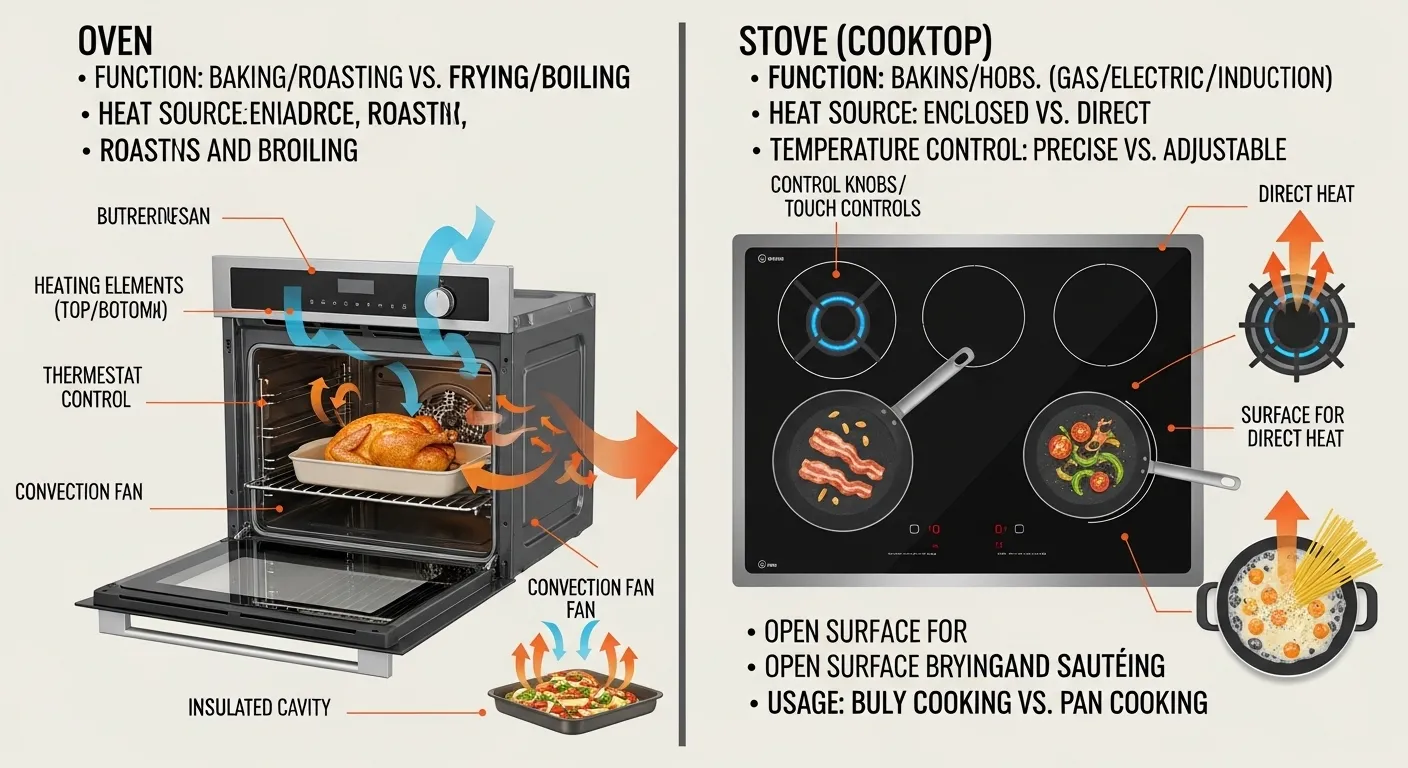
The difference between oven and stove often confuses beginners because both are used to prepare food, but their cooking methods are entirely different. In simple terms, an oven surrounds food with heat, while a stove applies direct heat from below. This distinction becomes clearer when we explore real-life cooking scenarios like baking, roasting, frying, and boiling.
When people compare oven vs stove, they are usually trying to decide which appliance is better for a specific task. The truth is, both are equally important but serve different purposes. Knowing the difference between them can improve your cooking results, save time, and help you choose the right method for every recipe.
Key Difference Between the Both
The core difference between oven and stove lies in heat application. An oven uses enclosed, even heat for baking and roasting, whereas a stove provides direct heat through burners for quick cooking tasks.
Why Is Their Difference Important for Learners and Experts?
Understanding the difference between oven and stove is important for both beginners and professionals. For learners, it builds a strong foundation in cooking techniques and helps avoid common mistakes, like trying to bake on direct heat.
For experts, this knowledge enhances precision and creativity. Chefs rely on ovens for controlled, slow cooking and stoves for fast, responsive cooking. In society, these appliances are essential for preparing daily meals, supporting the food industry, and promoting efficient and healthy cooking habits.
Pronunciation of Both (US & UK)
- Oven
- US: /ˈʌv.ən/
- UK: /ˈʌv.ən/
- Stove
- US: /stoʊv/
- UK: /stəʊv/
Now that you know how to pronounce them, let’s move forward and explore the detailed difference between both in everyday use.
Difference Between Oven and Stove
1. Cooking Method
- Oven: Uses indirect heat for even cooking.
- Example 1: Baking a cake
- Example 2: Roasting chicken
- Stove: Uses direct heat from burners.
- Example 1: Frying eggs
- Example 2: Boiling water
2. Heat Distribution
- Oven: Heat surrounds the food.
- Example 1: Baking cookies evenly
- Example 2: Roasting vegetables
- Stove: Heat is concentrated at one point.
- Example 1: Cooking rice
- Example 2: Stir-frying noodles
3. Cooking Speed
- Oven: Slower cooking process.
- Example 1: Baking bread
- Example 2: Cooking lasagna
- Stove: Faster cooking.
- Example 1: Making tea
- Example 2: Frying fish
4. Food Types
- Oven: Best for baking and roasting.
- Example 1: Cakes
- Example 2: Pizza
- Stove: Best for frying and boiling.
- Example 1: Soup
- Example 2: Pasta
5. Temperature Control
- Oven: Precise temperature settings.
- Example 1: Baking at 180°C
- Example 2: Roasting at 200°C
- Stove: Controlled by flame or heat level.
- Example 1: Simmering sauce
- Example 2: High-heat frying
6. Structure
- Oven: Enclosed compartment.
- Example 1: Electric oven
- Example 2: Convection oven
- Stove: Open surface with burners.
- Example 1: Gas stove
- Example 2: Induction stove
7. Energy Use
- Oven: Uses more energy over time.
- Example 1: Baking cake
- Example 2: Roasting meat
- Stove: Uses less energy for quick tasks.
- Example 1: Boiling eggs
- Example 2: Heating milk
8. Cooking Style
- Oven: Hands-off cooking.
- Example 1: Baking brownies
- Example 2: Roasting turkey
- Stove: Requires attention.
- Example 1: Stirring curry
- Example 2: Frying vegetables
9. Kitchen Space
- Oven: Larger and fixed.
- Example 1: Built-in oven
- Example 2: Wall oven
- Stove: Compact and sometimes portable.
- Example 1: Portable burner
- Example 2: Tabletop stove
10. Skill Requirement
- Oven: Requires timing and planning.
- Example 1: Baking cakes
- Example 2: Making pastries
- Stove: Requires quick handling skills.
- Example 1: Stir-frying
- Example 2: Sautéing
Nature and Behaviour of Both
An oven provides a stable and controlled cooking environment. It maintains consistent heat, making it perfect for recipes that require precision and patience.
A stove is more dynamic and responsive. It heats quickly and allows instant adjustments, making it ideal for fast cooking. This contrast is often highlighted in the oven vs stove comparison, where stability meets speed.
Why People Are Confused About Their Use?
| Aspect | Oven | Stove | Similarity |
| Function | Baking & roasting | Frying & boiling | Both cook food |
| Heat Type | Indirect | Direct | Use heat energy |
| Speed | Slow | Fast | Essential appliances |
| Usage | Controlled cooking | Quick cooking | Found in kitchens |
People get confused because both are used for cooking and are often combined in one appliance, making their roles seem similar at first glance.
Which Is Better in What Situation?
An oven is better when you need even and consistent cooking. It is ideal for baking cakes, roasting meat, and preparing dishes that require precise temperature control. In the oven vs stove comparison, ovens are clearly superior for slow and even cooking processes.
A stove is better for quick meals and immediate heat control. It is perfect for frying, boiling, and sautéing. When comparing oven vs stove, the stove stands out for speed and flexibility, especially in time-sensitive cooking.
Use in Metaphors and Similes
- Oven: “The room felt like an oven in summer.”
- Stove: “She worked like a stove, always full of energy.”
Connotative Meaning
- Oven
- Positive: Warmth, comfort
- Example: “Her home was an oven of love.”
- Negative: Excessive heat
- Example: “The car turned into an oven.”
- Positive: Warmth, comfort
- Stove
- Positive: Energy, activity
- Example: “He was a stove of ideas.”
- Neutral: Everyday appliance
- Positive: Energy, activity
Idioms or Proverbs
- “Everything but the kitchen stove”
- Example: She packed everything but the kitchen stove for her trip.
Works in Literature
- The Oven – Poetry, Rita Dove, 1999
- The Stove – Short Story Collection, Various Authors, 20th Century
Movies Related to Both
- The Stove (2014, USA)
- Burnt (2015, USA/UK – cooking-based film featuring ovens and stoves)
FAQs
1. What is the difference between both?
An oven uses surrounding heat, while a stove uses direct heat from burners.
2. Which is better for baking?
An oven is best for baking because it provides even heat.
3. Can I cook everything on a stove?
No, some foods like cakes require an oven for proper cooking.
4. Why do people compare oven vs stove?
Because both are essential kitchen tools with different functions.
5. Which one is faster?
A stove is generally faster than an oven.
How Both Are Useful for Surroundings
Ovens and stoves are essential in homes, restaurants, and food industries. They help prepare meals efficiently, support daily living, and encourage healthier eating through home cooking.
Final Words for Both
The oven stands for precision and patience, while the stove represents speed and flexibility. Together, they create a balanced and efficient kitchen environment.
Conclusion
In conclusion, understanding the difference between oven and stove helps improve cooking efficiency and results. Ovens provide even, controlled heat for baking and roasting, while stoves offer direct and quick heat for frying and boiling. The oven vs stove comparison shows that both appliances have unique strengths and are equally important in the kitchen. By learning when and how to use each, you can enhance your cooking skills and prepare better meals. Ultimately, mastering the difference between oven and stove allows you to cook smarter and more effectively every day.

Sarfraz Ahmad is language researcher and content writer who specializes in explaining the difference between commonly confused English words. Through WordClearify, learners understand subtle word distinctions in a simple, structured, and practical way. My writing focuses on clarity, real-life examples, and easy comparisons for students, bloggers, and professionals worldwide.