A young woman once met someone at a university event. After one short conversation, she could not stop thinking about him. She checked her phone constantly, replayed every word he said, and imagined a perfect future with him. Months later, she realized that what she felt was not deep affection but an intense emotional fixation. This experience perfectly explains the difference between love and limerence.
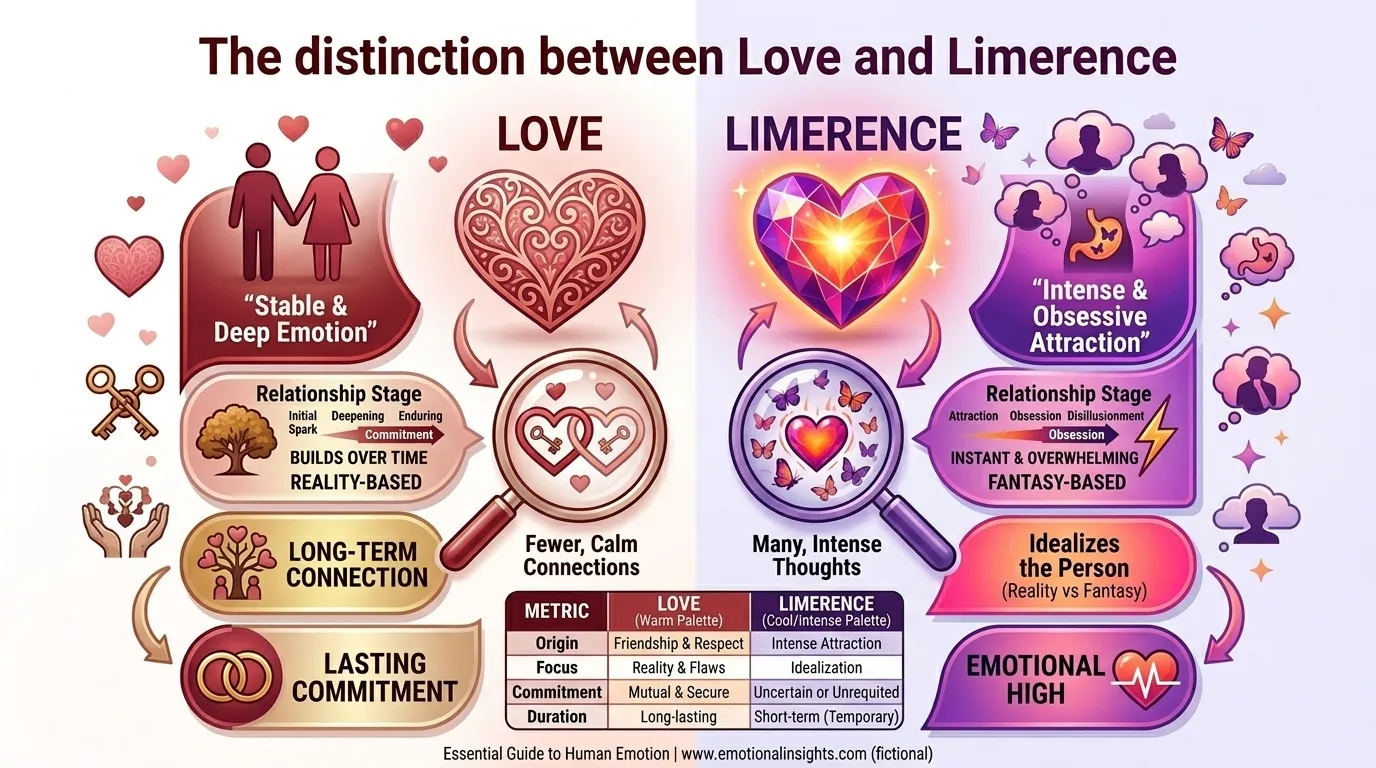
Love is usually described as a deep, stable, and caring emotional connection between people. It develops gradually and includes trust, respect, and long-term commitment. Limerence, on the other hand, is an intense emotional state characterized by obsessive thoughts, idealization, and a strong desire for emotional reciprocation.
Understanding the difference between both is important because many people mistake emotional obsession for genuine affection. In fact, discussions about love vs limerence often reveal how easily excitement and fantasy can be confused with true emotional bonding. When we explore the difference between both, we learn how emotions evolve and how relationships become healthy or unhealthy over time.
Key Difference Between the Both
The most important difference between love and limerence lies in emotional stability and depth.
Love is stable, realistic, and focused on mutual care and respect. It grows slowly and survives challenges such as disagreements, distance, and everyday responsibilities.
Limerence is intense but often temporary. It is driven by excitement, uncertainty, and the desire for validation. People experiencing limerence often idealize the other person and ignore flaws.
In simple terms, love builds relationships while limerence creates emotional obsession.
Why Their Difference Is Necessary to Know for Learners and Experts
Understanding the difference between both is essential not only for individuals but also for psychologists, educators, and relationship experts.
For learners, knowing this distinction helps them recognize healthy emotions in friendships and romantic relationships. Many young people believe that intense attraction automatically means love. However, studying love vs limerence teaches them to identify emotional maturity and stability.
For experts in psychology and sociology, this difference provides insight into human behavior, attachment patterns, and relationship dynamics. Therapists often analyze the difference between love and limerence to help people understand unhealthy emotional dependence.
In society, awareness of this distinction encourages healthier relationships, reduces emotional misunderstandings, and promotes emotional intelligence.
Pronunciation of Both (US & UK)
Love
US pronunciation: /lʌv/
UK pronunciation: /lʌv/
Limerence
US pronunciation: /ˈlɪmərəns/
UK pronunciation: /ˈlɪmərəns/
While the pronunciation is straightforward, the emotional meaning behind these words is far more complex.
Difference Between the Love and Limerence
1. Emotional Depth
Love involves deep emotional attachment that grows over time.
Limerence is mainly driven by intense attraction and emotional excitement.
Example of love:
A couple supports each other through financial struggles and health problems.
Another example:
Parents continue to care for their children even when they disagree with them.
Example of limerence:
Someone constantly thinks about a new crush after only a few interactions.
Another example:
A person feels extreme happiness just from receiving a message from someone they admire.
2. Duration
Love tends to last for many years or even a lifetime.
Limerence usually fades after the excitement disappears.
Example of love:
A married couple remains committed to each other for decades.
Another example:
Two close friends maintain their bond throughout life.
Example of limerence:
A person feels intense attraction for a colleague but loses interest after a few months.
Another example:
A teenager becomes obsessed with someone but forgets them later.
3. Focus on Reality
Love accepts the strengths and weaknesses of a person.
Limerence often ignores flaws and creates unrealistic fantasies.
Example of love:
Someone loves their partner despite their imperfections.
Another example:
Friends accept each other’s different personalities.
Example of limerence:
A person believes their crush is perfect.
Another example:
Someone imagines a perfect relationship without knowing the other person well.
4. Emotional Stability
Love is emotionally calm and balanced.
Limerence often causes emotional highs and lows.
Example of love:
A partner feels secure even when communication is limited.
Another example:
Couples handle disagreements calmly.
Example of limerence:
Someone becomes anxious if their crush does not reply quickly.
Another example:
A person feels extreme joy after a small sign of attention.
5. Level of Obsession
Love allows space and independence.
Limerence can become obsessive.
Example of love:
Partners respect each other’s personal time.
Another example:
Friends maintain their individual interests.
Example of limerence:
A person checks social media profiles repeatedly.
Another example:
Someone constantly imagines interactions with their crush.
6. Motivation
Love focuses on giving and caring.
Limerence focuses on receiving attention and validation.
Example of love:
Helping a partner achieve their dreams.
Another example:
Supporting someone emotionally during hard times.
Example of limerence:
Seeking constant reassurance from the other person.
Another example:
Feeling incomplete without the other person’s approval.
7. Communication
Love encourages honest communication.
Limerence often creates nervousness and fear of rejection.
Example of love:
Partners discuss problems openly.
Another example:
Friends share honest opinions.
Example of limerence:
Someone hesitates to express their true feelings.
Another example:
A person overanalyzes every conversation.
8. Independence
Love respects individuality.
Limerence may create emotional dependency.
Example of love:
A couple enjoys separate hobbies.
Another example:
Partners encourage personal growth.
Example of limerence:
A person feels unhappy without constant contact.
Another example:
Someone loses focus on work or studies.
9. Long-Term Goals
Love focuses on building a future.
Limerence focuses on emotional excitement.
Example of love:
Planning marriage or family together.
Another example:
Making joint financial decisions.
Example of limerence:
Imagining romantic moments rather than realistic plans.
Another example:
Daydreaming about perfect scenarios.
10. Emotional Impact
Love creates peace and security.
Limerence often creates anxiety.
Example of love:
Feeling calm in the presence of a partner.
Another example:
Trusting the relationship even during distance.
Example of limerence:
Feeling nervous before meeting a crush.
Another example:
Becoming overly excited by small interactions.
Discuss the Nature and Behaviour of Both Separately
Nature of Love
Love is nurturing, patient, and understanding. It grows through shared experiences, trust, and communication. People in love value emotional connection more than temporary excitement.
Nature of Limerence
Limerence is intense, passionate, and sometimes overwhelming. It often involves fantasy, idealization, and emotional dependence. Although it can feel powerful, it may not last long.
Why People Are Confused About Their Use
Many people confuse these emotions because both involve attraction and strong feelings. Early stages of romance can look similar to limerence, which is why the topic of love vs limerence appears frequently in psychological discussions.
| Aspect | Love | Limerence |
| Emotional stability | Calm and steady | Intense and fluctuating |
| Duration | Long-term | Often temporary |
| Focus | Mutual care | Emotional obsession |
| Realism | Accepts flaws | Idealizes person |
| Dependency | Healthy independence | Emotional dependence |
Which Is Better in What Situation?
Love
Love is better for long-term relationships because it builds trust, stability, and mutual respect. It supports emotional growth and helps people develop meaningful connections that last through life challenges.
Limerence
Limerence may play a role in the early excitement of attraction. It can motivate people to pursue relationships and express emotions. However, it should gradually develop into deeper affection to create lasting bonds.
Use in Metaphors and Similes
Love is often compared to warmth, light, or a journey.
Examples
Love is like a steady flame that keeps a home warm.
Her love was as deep as the ocean.
Limerence is often compared to fire or storms.
Examples
His limerence burned like wildfire.
Her feelings were like a sudden storm of emotions.
Connotative Meaning of Both
Love
Positive: kindness, devotion, trust
Example: Her love for her family kept her strong.
Neutral: emotional attachment
Example: His love for music inspired his career.
Limerence
Neutral: intense attraction
Example: She experienced limerence during her first crush.
Negative: obsession or emotional fixation
Example: His limerence distracted him from his studies.
Idioms or Proverbs Related to the Words
Love
Love is blind
Example: He ignored all her flaws because love is blind.
All is fair in love and war
Example: They competed for the same person, believing all is fair in love and war.
Limerence-related expressions
Head over heels
Example: She fell head over heels for her new colleague.
Love at first sight
Example: He believed it was love at first sight when he met her.
Works in Literature
- Love Story — Romance novel by Erich Segal (1970)
- Romeo and Juliet — Tragedy by William Shakespeare (1597)
- Pride and Prejudice — Romantic novel by Jane Austen (1813)
- The Sorrows of Young Werther — Romantic novel by Johann Wolfgang von Goethe (1774)
Movies Made on These Themes
- Love Story — 1970, United States
- Titanic — 1997, United States
- Before Sunrise — 1995, United States
- The Notebook — 2004, United States
Frequently Asked Questions
1. What is the main difference between love and limerence?
Love is stable and long-lasting, while limerence is intense and often temporary.
2. Can limerence turn into love?
Yes, if emotional understanding and commitment develop over time.
3. Is limerence unhealthy?
Not always, but it can become unhealthy if it turns into obsession.
4. How long does limerence usually last?
It may last from a few months to a couple of years.
5. Why do people confuse love with limerence?
Because both involve strong emotions and attraction.
How Both Are Useful for Surroundings
Love strengthens families, friendships, and communities. It encourages empathy, cooperation, and emotional stability.
Limerence, although temporary, can inspire creativity and motivation. It often appears in art, music, and poetry, reflecting the intensity of human emotions.
Final Words for Both
Love represents emotional maturity and long-term commitment. Limerence represents intense attraction and emotional excitement. Understanding their distinction helps people build healthier relationships and recognize genuine affection.
Conclusion
The difference between love and limerence is more than a simple vocabulary distinction. It reflects two very different emotional experiences. Love is steady, supportive, and long-lasting, while limerence is intense, passionate, and often temporary. By understanding the contrast between love vs limerence, people can better recognize healthy emotional connections. Recognizing the difference between both allows individuals to build meaningful relationships based on trust, respect, and genuine affection rather than temporary emotional obsession.

Sarfraz Ahmad is language researcher and content writer who specializes in explaining the difference between commonly confused English words. Through WordClearify, learners understand subtle word distinctions in a simple, structured, and practical way. My writing focuses on clarity, real-life examples, and easy comparisons for students, bloggers, and professionals worldwide.