Every day, people try to improve their health by choosing the right nutrients. Imagine someone walking into a pharmacy after hearing that glutamine helps muscle recovery while glutathione improves skin and detoxification. The names sound similar, and many assume they work the same way. However, the difference between glutamine and glutathione is quite significant.
Understanding glutamine vs glutathione can help people make better health choices. While both compounds play vital roles in the body, their functions, chemical structures, and health benefits differ. Some athletes rely on glutamine for muscle repair, while others take glutathione for its antioxidant power.
Learning the difference between both is important not only for students and health professionals but also for anyone interested in nutrition and wellness. This article explains both in a clear and practical way so readers can understand how each compound supports the body.
Key Difference Between the Both
The main difference between both lies in their structure and function.
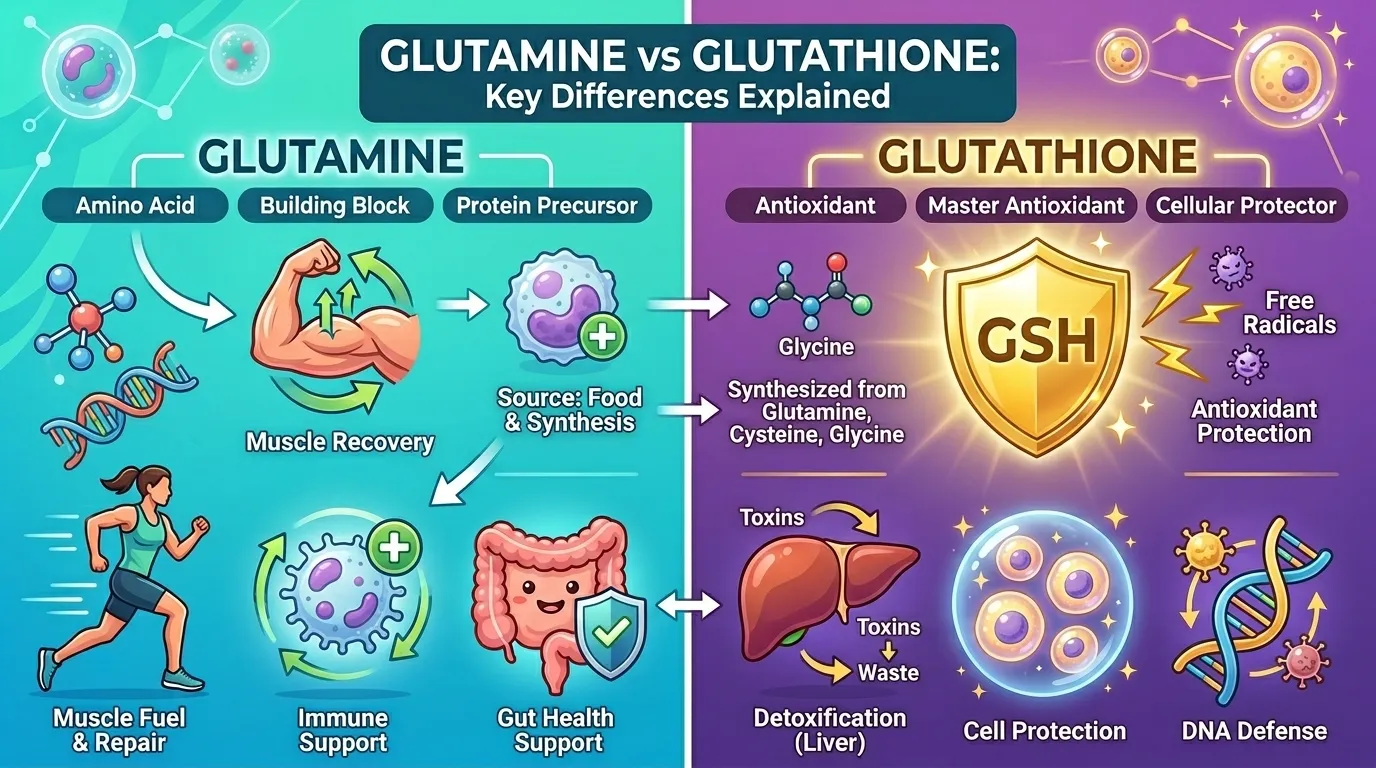
- Glutamine is an amino acid that helps with muscle recovery, immune support, and gut health.
- Glutathione is a powerful antioxidant made from three amino acids that protects cells from oxidative damage and supports detoxification.
In simple terms, glutamine mainly builds and repairs tissues, while glutathione mainly protects cells from damage.
Why Is Their Difference Important for Learners and Experts?
Understanding both is valuable for many groups in society.
Students studying biology or nutrition need to understand how different compounds work in the body. Knowing the difference between both helps them understand metabolism, immunity, and cellular protection.
Health professionals such as doctors, dietitians, and fitness trainers also benefit from this knowledge. For example, athletes may require glutamine supplements for muscle repair, while patients dealing with oxidative stress may benefit from glutathione.
In society, health awareness is growing. People want to know which nutrients help with energy, immunity, detoxification, and skin health. Understanding both allows individuals to make informed decisions about supplements and lifestyle choices.
Pronunciation of Both (US & UK)
- Glutamine
- US: GLOO-tuh-meen
- UK: GLOO-tuh-meen
- Glutathione
- US: gloo-tuh-THY-ohn
- UK: gloo-tuh-THY-ohn
Although the pronunciations are somewhat similar, the two words represent completely different biochemical compounds.
Difference Between the Glutamine and Glutathione
1. Chemical Structure
Glutamine is a single amino acid, while glutathione is a tripeptide made from three amino acids (glutamine, cysteine, and glycine).
Example 1:
After a workout, athletes take glutamine supplements to help muscles rebuild.
Example 2:
Doctors often discuss glutathione when explaining antioxidant protection in cells.
2. Primary Function
Glutamine supports muscle growth and immune health, while glutathione mainly works as an antioxidant.
Example 1:
A bodybuilder consumes glutamine to recover faster from intense training.
Example 2:
Glutathione helps neutralize harmful free radicals in the body.
3. Role in the Immune System
Glutamine fuels immune cells, whereas glutathione protects them from oxidative damage.
Example 1:
During illness, the body uses more glutamine to support immune cells.
Example 2:
Glutathione protects immune cells from stress caused by toxins.
4. Source in the Body
Glutamine is naturally produced by muscles, while glutathione is produced inside cells.
Example 1:
The body releases glutamine from muscles during intense stress.
Example 2:
Cells synthesize glutathione to protect themselves from harmful chemicals.
5. Role in Detoxification
Glutamine indirectly supports detoxification through gut health, while glutathione directly detoxifies harmful substances.
Example 1:
Glutamine strengthens the intestinal lining.
Example 2:
Glutathione helps the liver remove toxins.
6. Role in Skin Health
Glutamine has minimal direct effect on skin, while glutathione is often linked with skin brightening and antioxidant protection.
Example 1:
Athletes rarely use glutamine for cosmetic benefits.
Example 2:
Some skincare treatments include glutathione for its antioxidant properties.
7. Dietary Sources
Glutamine is found in meat, fish, eggs, and dairy, while glutathione is found in foods like avocados, spinach, and asparagus.
Example 1:
Chicken and eggs contain glutamine.
Example 2:
Spinach provides natural glutathione.
8. Supplement Purpose
Glutamine supplements are used for muscle recovery, while glutathione supplements are used for detox and antioxidant support.
Example 1:
Athletes take glutamine after workouts.
Example 2:
People interested in detox often choose glutathione supplements.
9. Impact on Gut Health
Glutamine helps repair the intestinal lining, while glutathione mainly protects cells from oxidative stress.
Example 1:
Doctors sometimes recommend glutamine for gut health.
Example 2:
Glutathione helps prevent cellular damage.
10. Scientific Classification
Glutamine is classified as an amino acid, while glutathione is classified as an antioxidant peptide.
Example 1:
Nutrition textbooks describe glutamine as a conditionally essential amino acid.
Example 2:
Biochemistry books list glutathione as a major cellular antioxidant.
Nature and Behaviour of Both
Glutamine behaves like a building block in the body. It participates in protein synthesis, supports tissue growth, and fuels immune cells. Because of this, it is important for athletes, recovering patients, and people experiencing physical stress.
Glutathione behaves like a protector. Its main role is to defend cells against oxidative damage caused by free radicals, toxins, and pollution. It is essential for detoxification and cellular health.
Why Are People Confused About Their Use?
People often confuse glutamine vs glutathione for several reasons:
- Their names sound very similar
- Both are related to amino acids
- Both are available as supplements
- Both are associated with health and wellness
Table: Difference and Similarity
| Aspect | Glutamine | Glutathione |
| Type | Amino acid | Antioxidant peptide |
| Main Function | Muscle recovery | Cell protection |
| Structure | Single amino acid | Three amino acids |
| Role | Tissue repair | Detoxification |
| Common Use | Sports nutrition | Antioxidant therapy |
| Similarity | Both support health and are naturally present in the body |
Which Is Better in What Situation?
Glutamine is better for situations involving muscle recovery, intense physical activity, and gut health. Athletes often rely on glutamine supplements because intense exercise can reduce glutamine levels in muscles. By restoring these levels, the body can recover faster and maintain immune strength.
Glutathione is better when the goal is detoxification and antioxidant protection. People exposed to pollution, stress, or toxins may benefit from higher glutathione levels because it protects cells and helps the liver remove harmful substances.
Use in Metaphors and Similes
Even scientific terms can appear in metaphors.
Examples:
- “Glutathione works like a shield protecting cells from damage.”
- “Glutamine acts like fuel for muscle recovery.”
- “His immune system was strong, like a body powered by glutamine.”
- “Antioxidants guard the body like glutathione guards a cell.”
Connotative Meaning of Both
Glutamine
Positive:
Glutamine symbolizes strength and recovery.
Example: “Athletes rely on glutamine to rebuild their strength.”
Neutral:
Example: “Glutamine is an amino acid found in many foods.”
Negative:
Rarely negative but may appear in supplement misuse discussions.
Glutathione
Positive:
Represents protection and detoxification.
Example: “Glutathione protects the body from harmful toxins.”
Neutral:
Example: “Glutathione is naturally produced in cells.”
Negative:
Sometimes debated in cosmetic treatments.
Idioms or Proverbs Related to the Words
Since the words are scientific, direct idioms are rare. However, they can appear in expressions.
Examples:
- “Health is the body’s natural shield, just like glutathione.”
- “Recovery is the fuel of progress, like glutamine for muscles.”
Works in Literature
- “Biochemistry” – Jeremy M. Berg (Science Textbook, 2002)
- “Lehninger Principles of Biochemistry” – David Nelson (2005)
- “Molecular Cell Biology” – Harvey Lodish (2008)
These works discuss glutamine and glutathione in biochemical contexts.
Movies Related to the Glutamine and Glutathione
Direct movies rarely focus on these molecules, but health documentaries mention them.
- “Fat, Sick and Nearly Dead” (2010, USA)
- “Forks Over Knives” (2011, USA)
- “What the Health” (2017, USA)
Frequently Asked Questions
1. What is the main difference between both?
Glutamine is an amino acid used for muscle recovery, while glutathione is an antioxidant that protects cells from damage.
2. Is glutathione made from glutamine?
Yes. Glutathione is partly made from glutamine along with cysteine and glycine.
3. Which is better for athletes?
Glutamine is generally better for athletes because it supports muscle repair and immune health.
4. Which supports detoxification?
Glutathione plays a major role in detoxification, especially in the liver.
5. Can both be taken as supplements?
Yes, both are available as dietary supplements, but they serve different purposes.
How Both Are Useful for Surroundings
Both support human health, which indirectly benefits society. Healthy individuals are more productive, energetic, and capable of contributing to communities.
Glutamine supports recovery and immune strength, while glutathione protects the body from toxins and pollution. Together, they help maintain physical wellness in environments where stress and contaminants are common.
Final Words for Both
Glutamine and glutathione may sound similar, but their roles in the body are very different. One helps build and repair, while the other protects and detoxifies. Understanding both helps people choose the right nutrients for their needs.
Conclusion
The difference between glutamine and glutathione lies in their structure, function, and health benefits. Glutamine is an amino acid mainly responsible for muscle recovery, immune support, and gut health. In contrast, glutathione is a powerful antioxidant that protects cells and helps detoxify harmful substances. Understanding both is valuable for students, researchers, athletes, and anyone interested in better health. Although their names sound similar, their roles in the body are distinct and complementary. By learning about these compounds, individuals can make smarter nutritional and wellness decisions.

Sarfraz Ahmad is language researcher and content writer who specializes in explaining the difference between commonly confused English words. Through WordClearify, learners understand subtle word distinctions in a simple, structured, and practical way. My writing focuses on clarity, real-life examples, and easy comparisons for students, bloggers, and professionals worldwide.