Imagine you’re driving your car on a rainy day. As you press the accelerator, you notice how the car behaves differently depending on its design. This is where the concept of FWD (Front-Wheel Drive) and RWD (Rear-Wheel Drive) comes into play. Understanding the difference between FWD and RWD is essential for anyone who drives or plans to buy a vehicle.
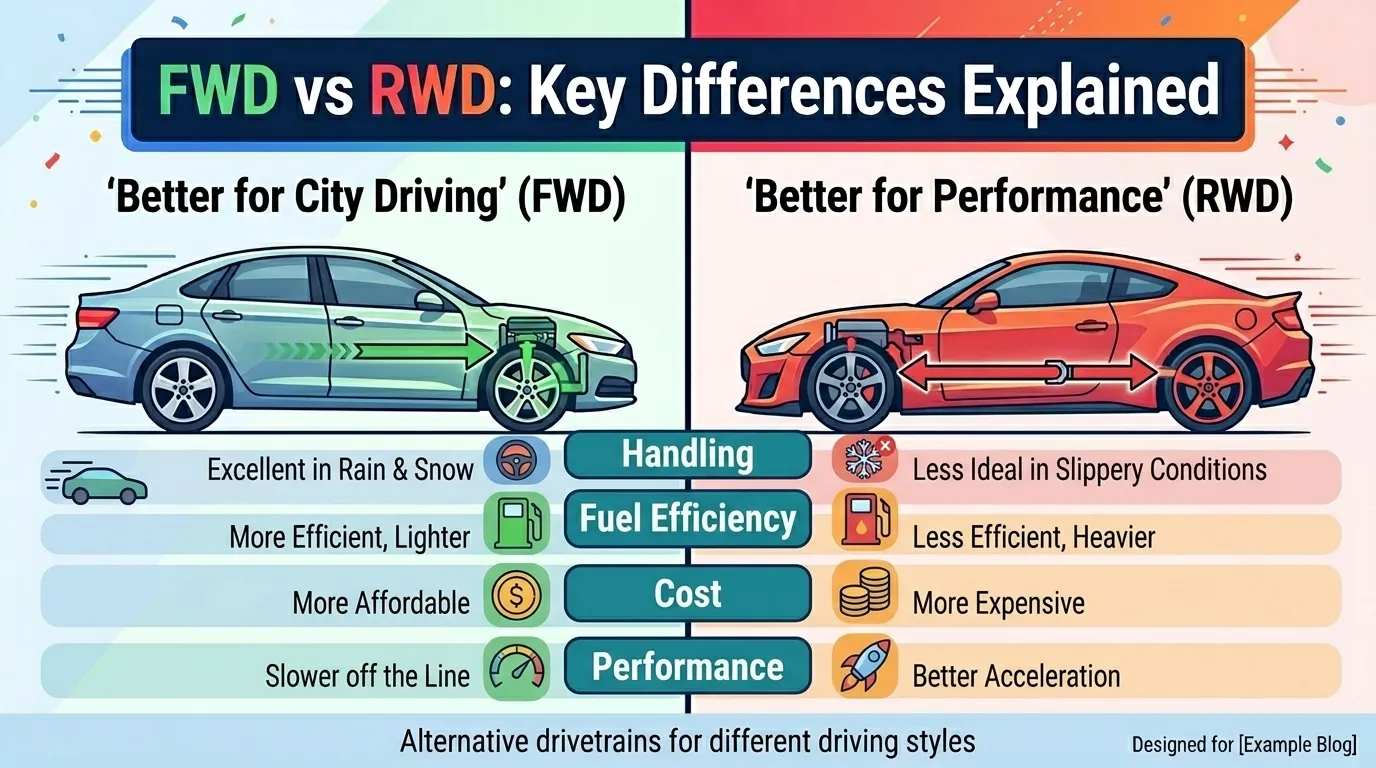
In simple terms, FWD means the engine sends power to the front wheels, while RWD delivers power to the rear wheels. The fwd vs rwd comparison becomes important when considering performance, safety, fuel efficiency, and handling.
Whether you’re a beginner or a professional, knowing the dynamics of both helps you make smarter decisions. In this guide, we will explore every aspect of fwd vs rwd in an easy and practical way.
Key Difference Between Both
The main difference lies in which wheels receive the engine power:
- FWD (Front-Wheel Drive): Power goes to the front wheels.
- RWD (Rear-Wheel Drive): Power goes to the rear wheels.
This simple difference changes how a car handles, accelerates, and performs under different conditions.
Why Is Their Difference Important?
Understanding the difference between FWD and RWD is crucial for both learners and experts because:
- It helps drivers choose the right vehicle for their needs.
- It improves safety by understanding handling behavior.
- It impacts fuel efficiency and maintenance costs.
- It plays a role in automotive engineering and innovation.
In modern society, where transportation is essential, knowing the fwd vs rwd concept allows individuals to make informed and practical decisions.
Pronunciation of Both (US & UK)
- FWD
- US: /ˌɛfˌdʌbəl.juːˈdiː/
- UK: /ˌɛfˌdʌbəl.juːˈdiː/
- RWD
- US: /ˌɑːrˌdʌbəl.juːˈdiː/
- UK: /ˌɑːˌdʌbəl.juːˈdiː/
Now that you know how to pronounce them, let’s move into the core comparison.
Difference Between FWD and RWD
1. Power Distribution
- FWD: Power is sent to front wheels.
- RWD: Power is sent to rear wheels.
Examples:
- FWD: Honda Civic
- FWD: Toyota Corolla
- RWD: BMW 3 Series
- RWD: Ford Mustang
2. Traction
- FWD: Better traction in rain/snow.
- RWD: Less traction in slippery conditions.
Examples:
- FWD: Easy driving in rain
- FWD: Stable on wet roads
- RWD: Slips on snow
- RWD: Needs careful control
3. Handling
- FWD: Easier to control.
- RWD: Better balance and performance.
Examples:
- FWD: Good for beginners
- FWD: Smooth city driving
- RWD: Sharp turns
- RWD: Better drifting
4. Weight Distribution
- FWD: Heavier front.
- RWD: Balanced weight.
Examples:
- FWD: Engine-heavy front
- FWD: Less rear load
- RWD: Equal weight spread
- RWD: Stable at high speeds
5. Acceleration
- FWD: Moderate acceleration.
- RWD: Strong acceleration.
Examples:
- FWD: Daily commuting
- FWD: Smooth start
- RWD: Fast pickup
- RWD: Sports performance
6. Fuel Efficiency
- FWD: More fuel-efficient.
- RWD: Slightly less efficient.
Examples:
- FWD: Long-distance travel
- FWD: Budget-friendly
- RWD: Higher fuel use
- RWD: Performance focus
7. Cost
- FWD: Cheaper to manufacture.
- RWD: More expensive.
Examples:
- FWD: Affordable cars
- FWD: Low maintenance
- RWD: Premium cars
- RWD: Expensive repairs
8. Interior Space
- FWD: More cabin space.
- RWD: Less space due to drivetrain.
Examples:
- FWD: Family cars
- FWD: More legroom
- RWD: Limited space
- RWD: Tunnel in middle
9. Performance
- FWD: Limited performance.
- RWD: High performance.
Examples:
- FWD: City driving
- FWD: Basic use
- RWD: Racing cars
- RWD: Sports vehicles
10. Maintenance
- FWD: Easier maintenance.
- RWD: Complex maintenance.
Examples:
- FWD: Fewer parts
- FWD: Lower cost
- RWD: More components
- RWD: Higher cost
Nature and Behaviour
- FWD: Stable, predictable, and beginner-friendly. Designed for comfort and safety.
- RWD: Dynamic, powerful, and performance-oriented. Requires skill to control.
Why People Are Confused?
| Feature | FWD | RWD | Similarity |
| Power Delivery | Front wheels | Rear wheels | Both use engine power |
| Usage | Daily driving | Performance driving | Used in modern cars |
| Cost | Affordable | Expensive | Maintenance required |
| Handling | Easy | Skill-based | Steering involved |
| Popularity | Very common | Less common | Both widely available |
People get confused because both systems perform the same basic function—moving a car—but in different ways.
Which Is Better in What Situation?
FWD:
FWD is better for everyday driving, especially in cities and areas with rain or snow. It offers better traction and fuel efficiency, making it ideal for beginners and families.
RWD:
RWD is better for performance driving, high-speed stability, and sports cars. It provides better balance and acceleration, making it suitable for experienced drivers.
Use in Metaphors and Similes
- “His approach was like FWD—safe and controlled.”
- “She handled challenges like a RWD car—bold and powerful.”
Connotative Meanings
- FWD
- Positive: Safe, reliable
- Negative: Less exciting
- Neutral: Practical
Example:
“His plan was FWD—safe but not thrilling.”
- RWD
- Positive: Powerful, dynamic
- Negative: Risky
- Neutral: Performance-based
Example:
“Her strategy was RWD—bold but challenging.”
Idioms or Proverbs
(No direct idioms exist, but adapted usage:)
- “Drive your life like FWD—stay steady.”
- “Go RWD when you want to take risks.”
Works in Literature
- Car: The Definitive Visual History – DK (Reference, 2011)
- How Cars Work – Tom Newton (Educational, 1999)
- Automotive Technology – Jack Erjavec (Technical, 2014)
Movies Related to Cars/Driving
- Fast & Furious (2001, USA)
- Rush (2013, UK/USA)
- Ford v Ferrari (2019, USA)
FAQs
1. What is the main difference between both?
FWD uses front wheels for power, while RWD uses rear wheels.
2. Which is safer?
FWD is generally safer in slippery conditions.
3. Which is better for performance?
RWD offers better performance and handling.
4. Is FWD cheaper?
Yes, FWD cars are usually more affordable.
5. Why do sports cars use RWD?
Because it provides better balance and acceleration.
How Both Are Useful for Surroundings
FWD vehicles are ideal for urban environments, reducing fuel consumption and ensuring safety. RWD vehicles contribute to advanced automotive design and high-performance transport systems. Together, they support transportation needs across different environments.
Final Words
Both have their own strengths. Choosing between them depends on your needs, driving style, and environment. Understanding the difference between FWD and RWD ensures better decisions and safer driving.
Conclusion
The difference between FWD and RWD goes beyond simple mechanics it affects how a car performs, feels, and responds to different conditions. While FWD offers practicality, safety, and efficiency, RWD delivers performance, balance, and excitement. The fwd vs rwd debate ultimately depends on personal preference and usage. By understanding their differences, drivers can make informed choices that suit their lifestyle and driving needs. Whether you’re a beginner or an expert, mastering the concept of both is essential in today’s automotive world.

Sarfraz Ahmad is language researcher and content writer who specializes in explaining the difference between commonly confused English words. Through WordClearify, learners understand subtle word distinctions in a simple, structured, and practical way. My writing focuses on clarity, real-life examples, and easy comparisons for students, bloggers, and professionals worldwide.