A traveler once visited Ireland and later explored Scotland. In both places, they heard people proudly talk about their roots sometimes calling them Celtic, other times Gaelic. Confused, the traveler wondered: are these words the same, or do they mean something different? This is where the difference between Celtic and Gaelic becomes important.
The phrase difference between both often puzzles learners because both terms are deeply connected to culture, language, and history. When discussing both, it’s easy to mix them up since Gaelic is actually a part of the broader Celtic world.
Understanding the difference between both helps not only language learners but also historians and cultural enthusiasts. In this article, we’ll break down Celtic vs Gaelic in a simple and engaging way so you can use these terms correctly and confidently.
Key Difference Between Celtic and Gaelic
The main difference is simple:
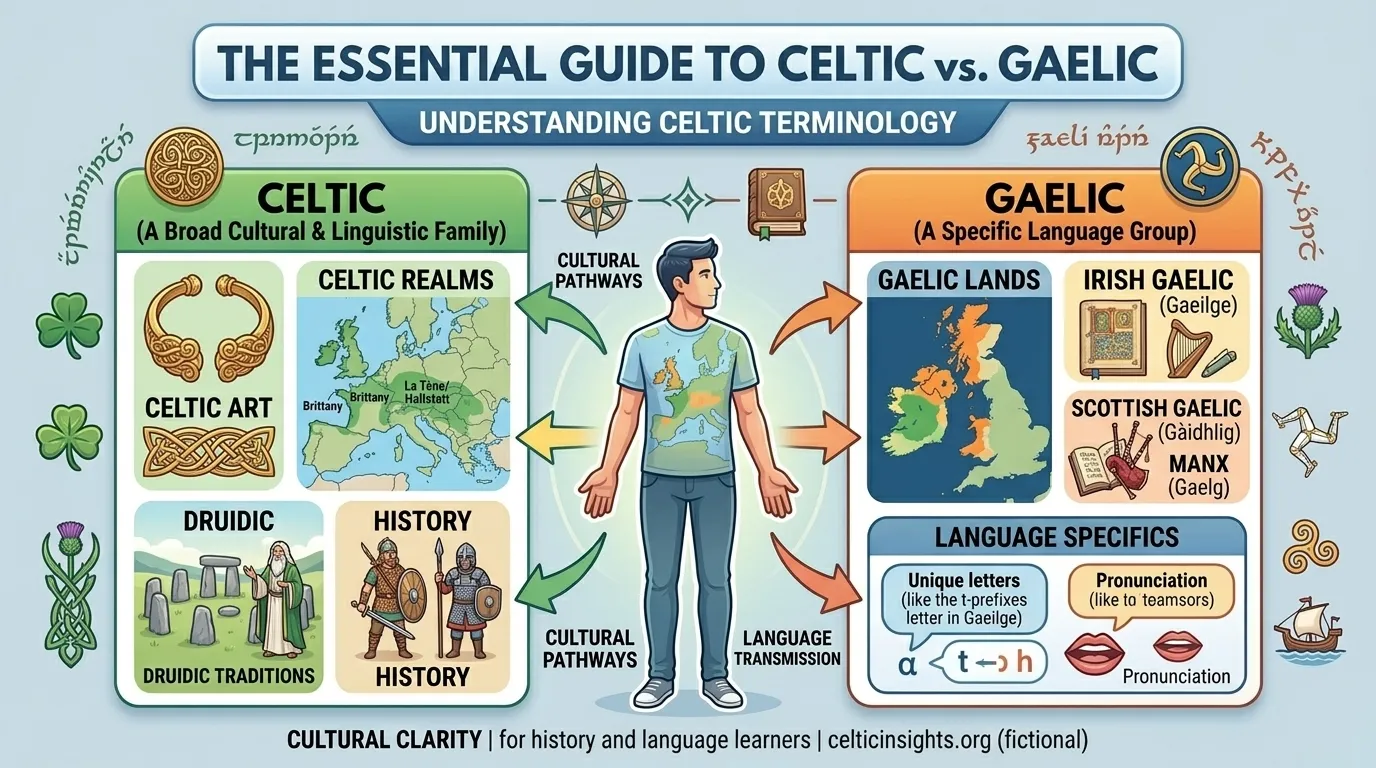
- Celtic is a broad term referring to a group of ancient peoples, cultures, and languages across Europe.
- Gaelic is a specific branch of the Celtic languages, mainly spoken in Ireland and Scotland.
Why Is Their Difference Important for Learners and Experts?
Understanding the difference between Celtic and Gaelic is essential for accurate communication. For students, it avoids confusion in history, linguistics, and cultural studies. For experts, it ensures precise academic discussions. In society, these terms hold cultural identity. Calling something Celtic instead of Gaelic (or vice versa) may overlook important traditions. For example, Welsh culture is Celtic but not Gaelic. This distinction helps preserve heritage and respect diversity across regions.
Pronunciation of Both (US & UK)
- Celtic
- US: /ˈsɛltɪk/ or /ˈkɛltɪk/
- UK: /ˈkɛltɪk/
- Gaelic
- US: /ˈɡeɪlɪk/
- UK: /ˈɡælɪk/ or /ˈɡeɪlɪk/
Difference Between the Celtic and Gaelic
1. Scope
- Celtic: Refers to a wide cultural group.
- Example 1: Celtic traditions include Irish and Welsh customs.
- Example 2: Celtic art spans many regions.
- Gaelic: Refers to a specific language group.
- Example 1: Gaelic is spoken in Ireland.
- Example 2: Scottish Gaelic differs slightly.
2. Usage
- Celtic: Used in historical and cultural contexts.
- Example 1: Celtic festivals are celebrated today.
- Gaelic: Used mainly for language.
- Example 1: Gaelic is taught in schools.
- Example 2: Gaelic phrases are used in daily speech.
3. Geographic Range
- Celtic: Found across Europe.
- Example 1: Celtic roots in France.
- Example 2: Celtic culture in Wales.
- Gaelic: Limited to Ireland and Scotland.
- Example 1: Irish Gaelic in Ireland.
- Example 2: Scottish Gaelic in Scotland.
4. Historical Meaning
- Celtic: Ancient tribal identity.
- Example 1: Celtic warriors.
- Example 2: Celtic mythology.
- Gaelic: Later linguistic identity.
- Example 1: Gaelic-speaking communities.
- Example 2: Gaelic literature.
5. Cultural Association
- Celtic: Music, art, and traditions.
- Example 1: Celtic knots.
- Example 2: Celtic festivals.
- Gaelic: Language and storytelling.
- Example 1: Gaelic songs.
- Example 2: Gaelic poetry.
6. Linguistic Category
- Celtic: Language family.
- Example 1: Includes Welsh.
- Example 2: Includes Breton.
- Gaelic: Subgroup of Celtic.
- Example 1: Irish Gaelic.
- Example 2: Scottish Gaelic.
7. Popular Usage
- Celtic: Used broadly in media.
- Example 1: Celtic music genre.
- Example 2: Celtic heritage tours.
- Gaelic: Less commonly used.
- Example 1: Gaelic lessons.
- Example 2: Gaelic phrases.
8. Identity
- Celtic: Ethnic identity.
- Example 1: Celtic ancestry.
- Example 2: Celtic roots.
- Gaelic: Linguistic identity.
- Example 1: Gaelic speakers.
- Example 2: Gaelic communities.
9. Modern Relevance
- Celtic: Widely recognized globally.
- Example 1: Celtic festivals worldwide.
- Example 2: Celtic designs in fashion.
- Gaelic: Regionally significant.
- Example 1: Gaelic revival in Ireland.
- Example 2: Gaelic preservation programs.
10. Symbolism
- Celtic: Represents unity of cultures.
- Example 1: Celtic knot symbol.
- Example 2: Celtic cross.
- Gaelic: Represents linguistic heritage.
- Example 1: Gaelic scripts.
- Example 2: Gaelic storytelling.
Nature and Behaviour of Both
- Celtic: Broad, inclusive, and cultural. It connects multiple traditions, languages, and histories.
- Gaelic: Specific, linguistic, and regional. It focuses on communication and identity within certain communities.
Why Are People Confused About Their Use (Celtic vs Gaelic)?
People confuse both because they overlap. Gaelic belongs to the Celtic family, so they are related but not identical.
| Feature | Celtic | Gaelic |
| Type | Broad category | Specific subset |
| Scope | Culture & language | Language only |
| Regions | Europe-wide | Ireland & Scotland |
| Similarity | Both cultural terms | Both linked historically |
Which Is Better in What Situation?
Celtic is better when discussing history, art, or general cultural identity. For example, if you’re talking about traditions across Europe, “Celtic” is the correct choice because it covers a wider scope.
Gaelic, on the other hand, is better when referring to language or specific regional identity. If you are discussing how people speak in Ireland or Scotland, “Gaelic” is more precise and accurate.
Use in Metaphors and Similes
- Celtic:
- “Her dress had a Celtic charm, like ancient art.”
- Gaelic:
- “His speech flowed like Gaelic poetry.”
Connotative Meaning
- Celtic
- Positive: Rich heritage (e.g., “Celtic beauty”)
- Neutral: Cultural identity
- Gaelic
- Positive: Authentic tradition (e.g., “Gaelic roots”)
- Neutral: Language reference
Idioms or Proverbs
(Not many direct idioms exist, but creative usage is possible)
- “As deep as Celtic roots” – meaning strong heritage
- “Speaking like Gaelic winds” – meaning poetic speech
Works in Literature
- Celtic Twilight – Genre: Mythology | Writer: W. B. Yeats | Year: 1893
- Early Irish Myths and Sagas – Genre: Mythology | Writer: Jeffrey Gantz | Year: 1981
Movies Related to Both
- Braveheart – 1995, USA/UK (Celtic culture)
- The Secret of Kells – 2009, Ireland (Celtic art and heritage)
FAQs
1. Is Gaelic the same as Celtic?
No, Gaelic is a part of the Celtic language family.
2. Where is Gaelic spoken?
Mainly in Ireland and Scotland.
3. What does Celtic refer to?
A broad cultural and historical group.
How Both Are Useful for Surroundings
Celtic traditions enrich global culture through art, music, and festivals. Gaelic languages preserve identity and heritage, keeping ancient traditions alive in modern society.
Final Words for Both
Celtic represents unity and diversity, while Gaelic represents depth and specificity. Both are valuable in understanding European heritage.
Conclusion
In conclusion, the difference between Celtic and Gaelic lies in scope and usage. Celtic is a broad cultural and linguistic category, while Gaelic is a specific branch within it. Understanding Celtic vs Gaelic helps avoid confusion and allows for more accurate communication. Whether you are a student, traveler, or cultural enthusiast, knowing this distinction enhances your knowledge and appreciation of history. Ultimately, both terms are deeply connected and equally important, but they should be used carefully depending on context.

Sarfraz Ahmad is language researcher and content writer who specializes in explaining the difference between commonly confused English words. Through WordClearify, learners understand subtle word distinctions in a simple, structured, and practical way. My writing focuses on clarity, real-life examples, and easy comparisons for students, bloggers, and professionals worldwide.